Shinobu KAWASE (1950 -)
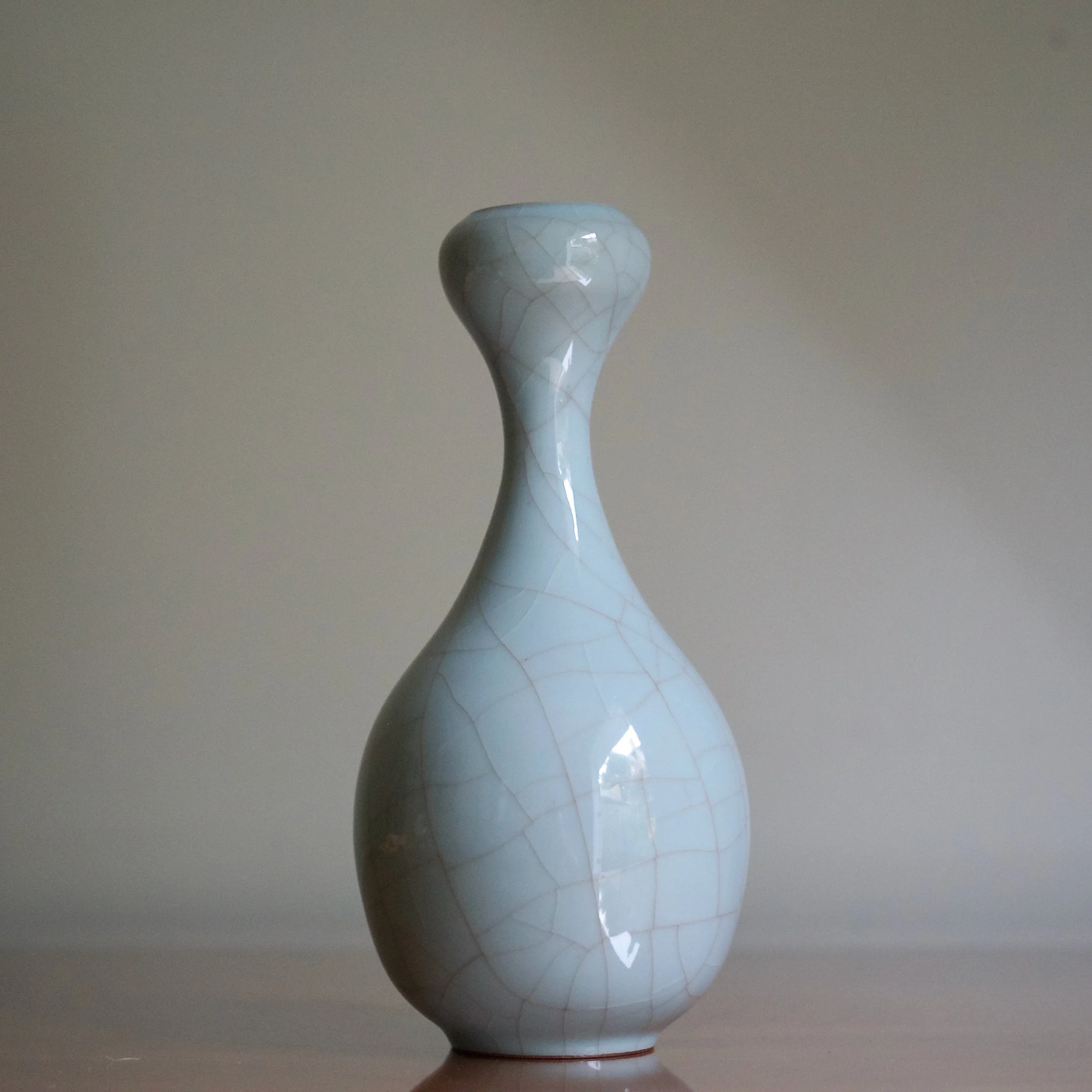
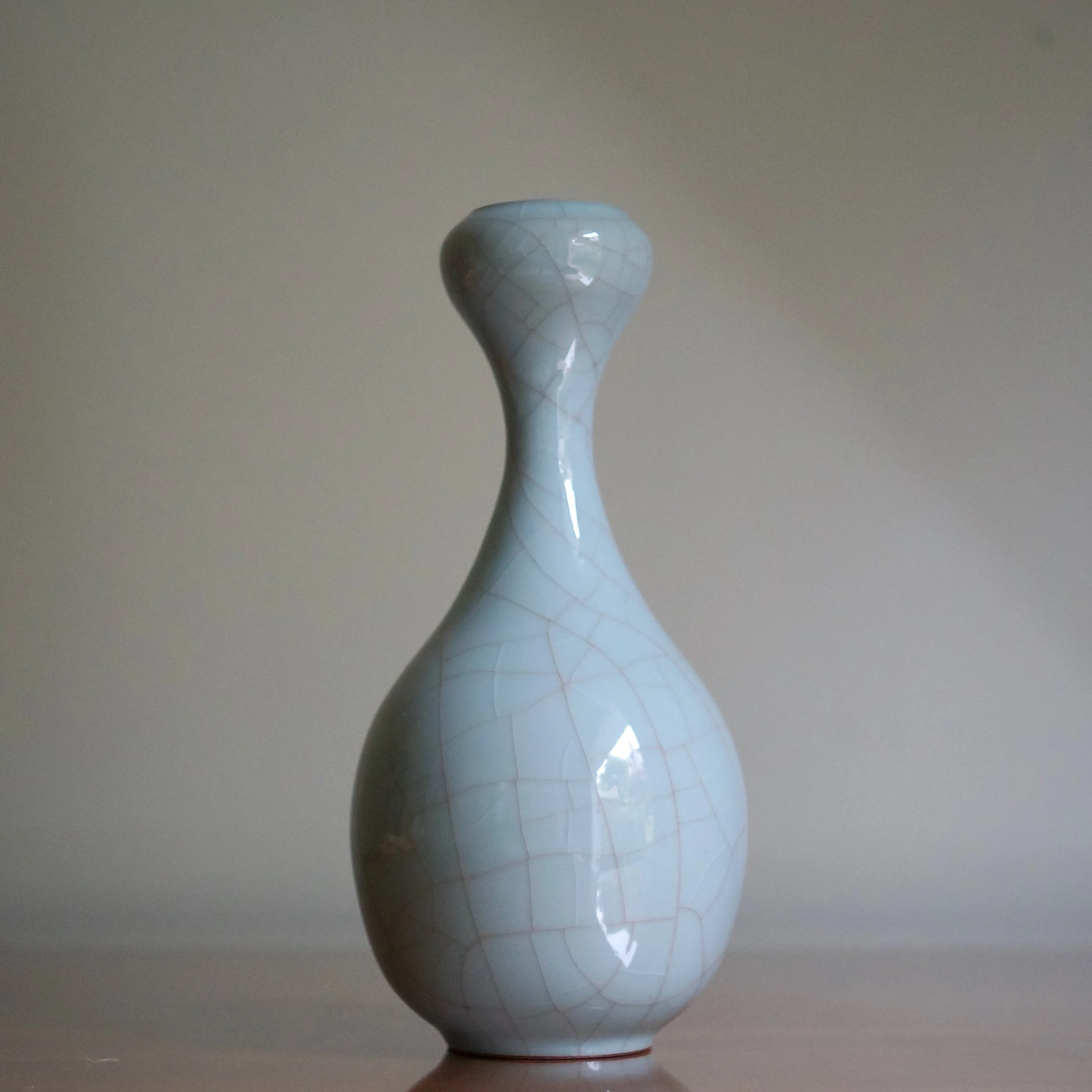
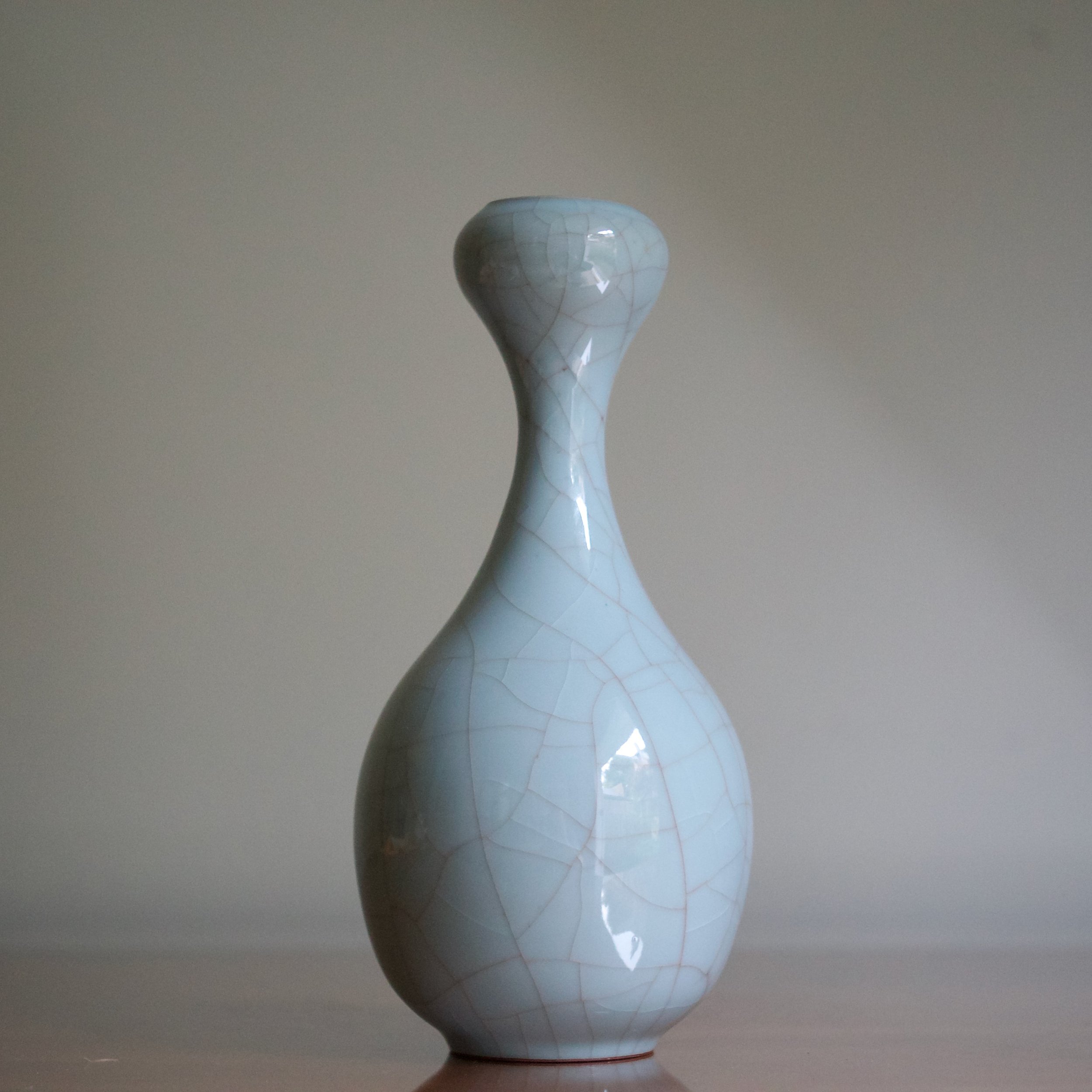
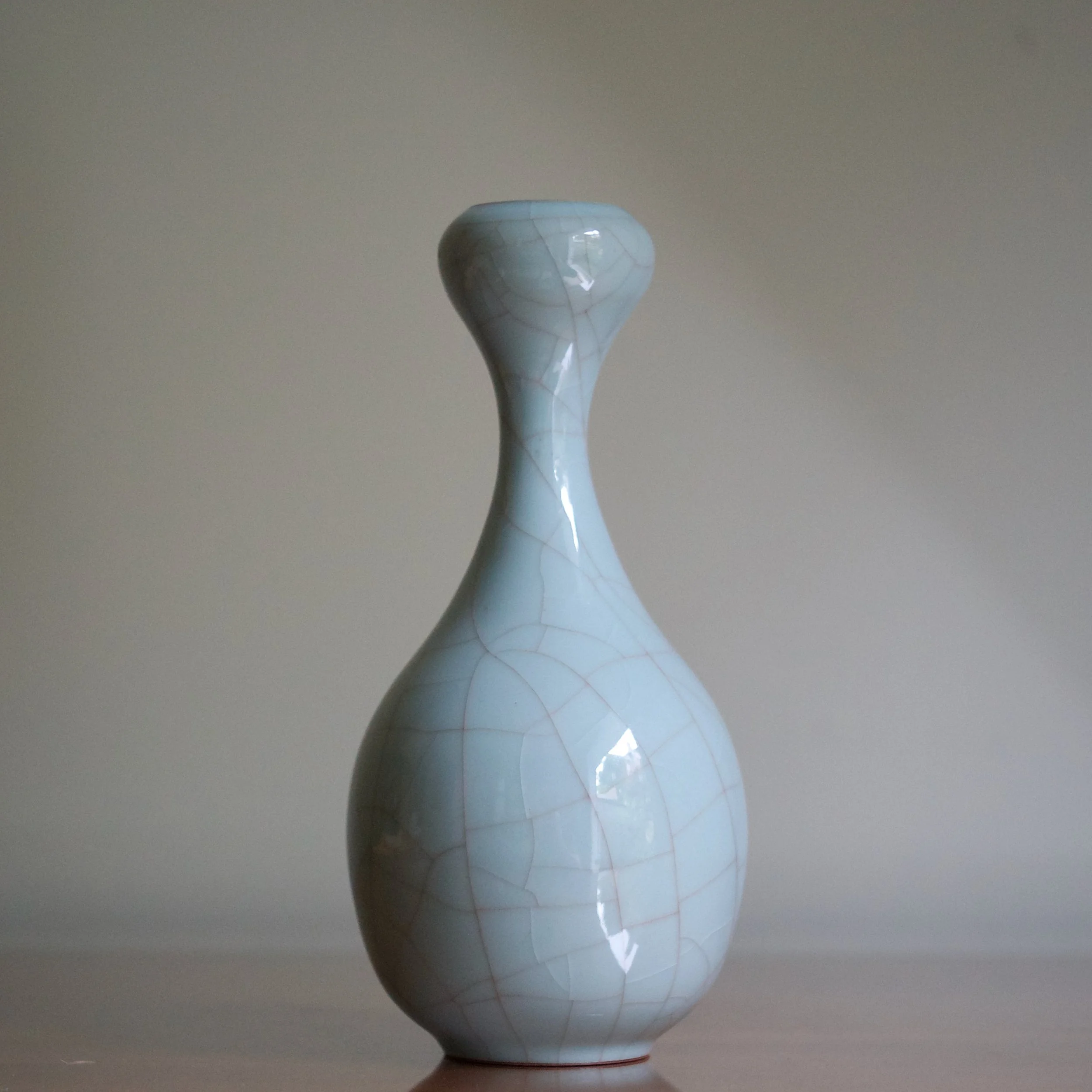
“青磁花入” celadon vase
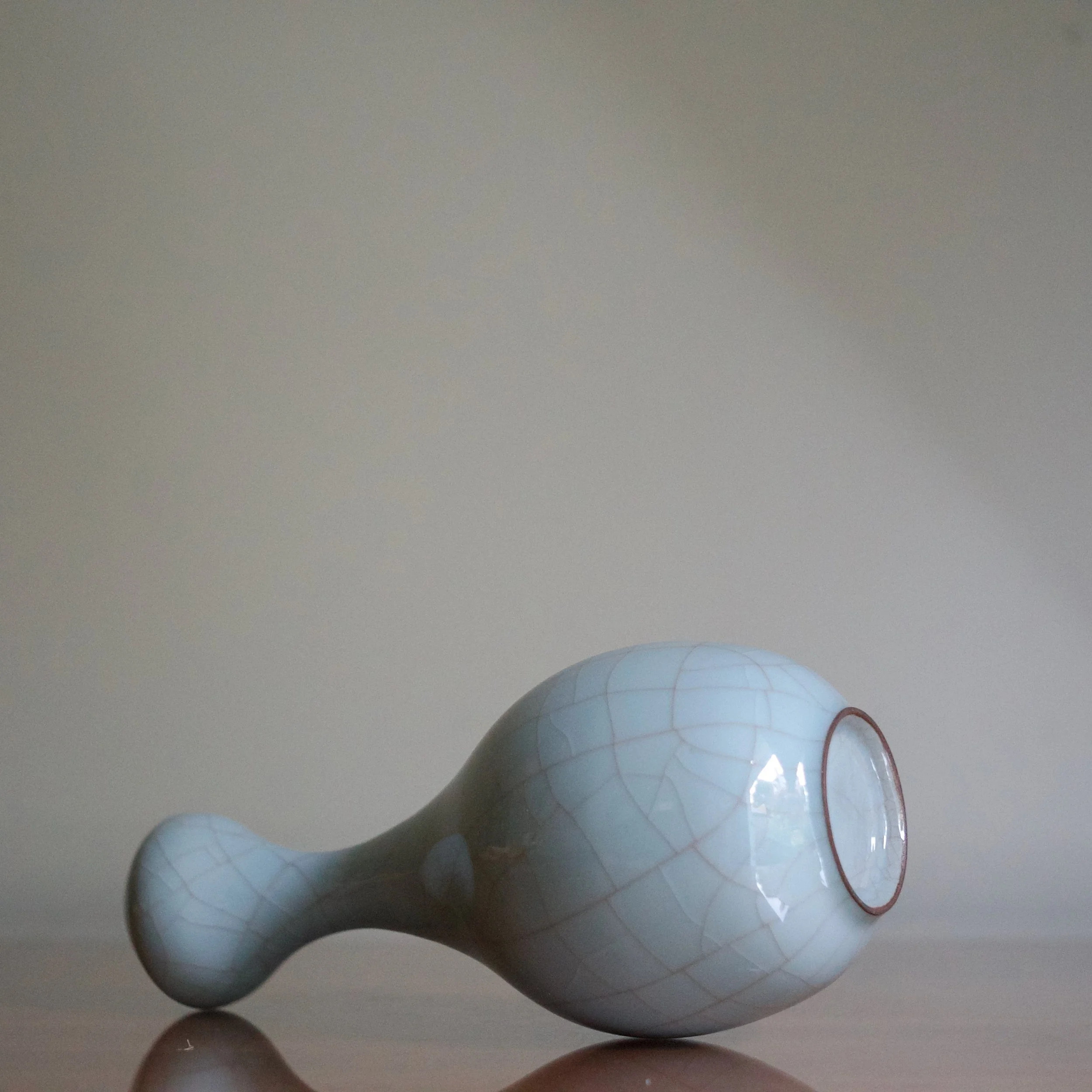
Oiso, Kanazawa; c. 1980’s; 8 3/4” tall by 4 1/8” wide.
$1,350 (CAD)
The celadon ceramics of Shinobu Kawase come in many classic shapes - especially his earlier works - largely inspired by early Chinese dynastic forms. From the first years of his practice, Kawase envisioned a life-long, four-part structure for his career: introduction, development, turn, and conclusion.
“Introduction” saw him studying and digesting the celadons of the Song dynasty. Similar to the concepts of imayaki or utsushi, Kawase's early work was not necessarily an attempt to emulate but rather learn from and absorb the canonical celadons of China. His contemporary tributes to Song ceramics quickly gained Kawase international recognition for capturing the spirit of classic celadons.
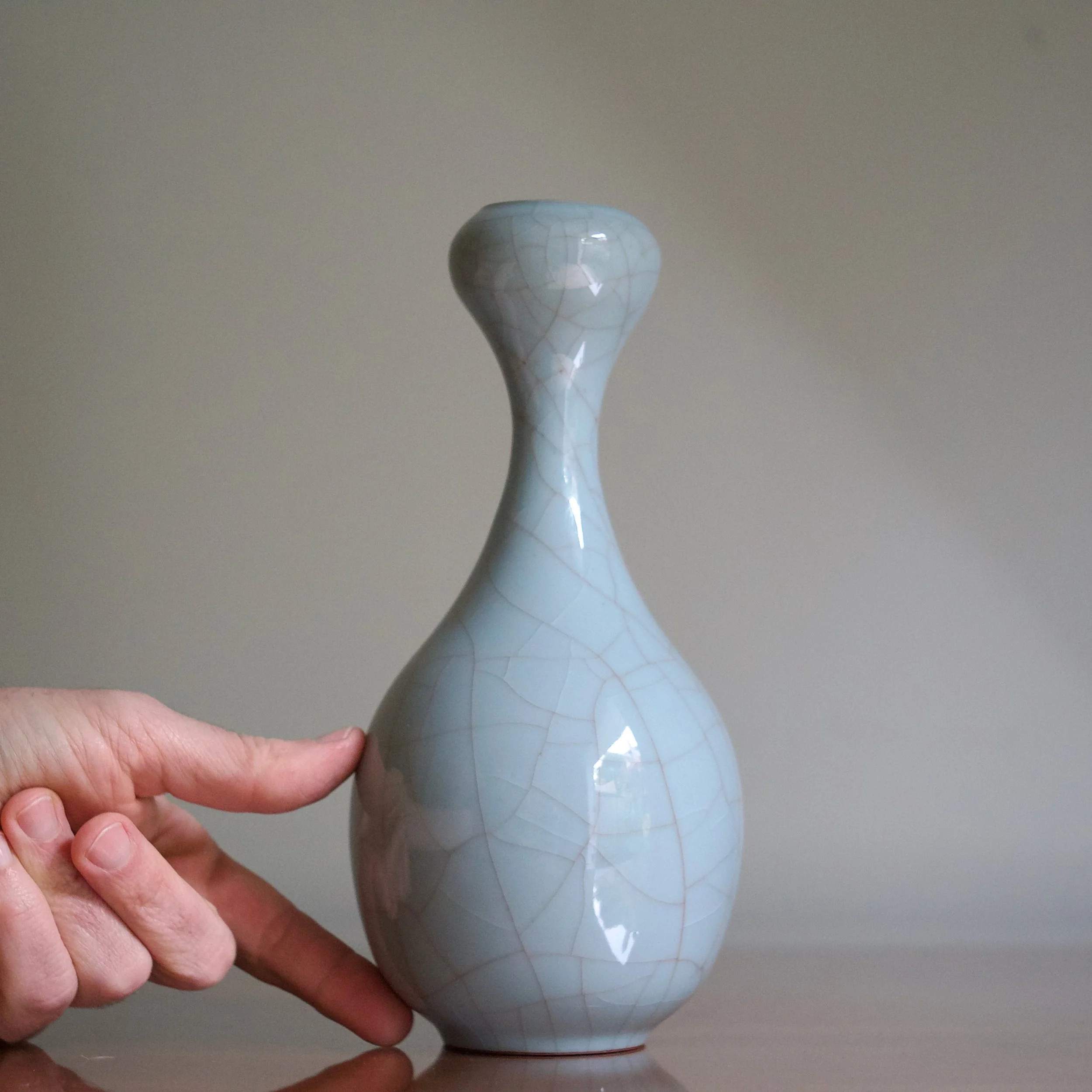
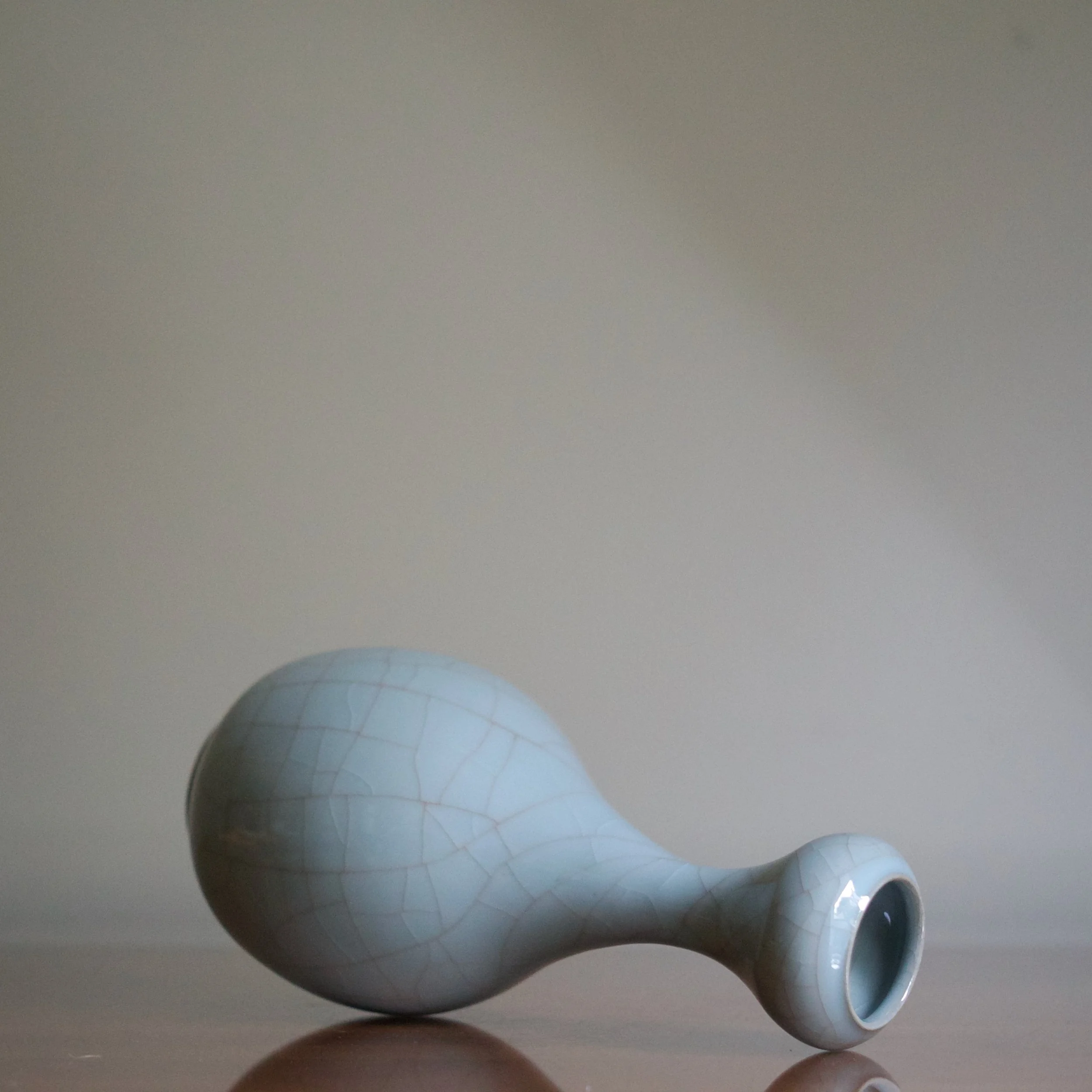
This early work of celadon by Kawase takes the form of what’s known as a garlic-mouth vase. The pear shaped body tapers up into a narrow neck but then swells outward in the shape of a garlic bulb. This form became popular in mid-Song era and was commonly used for Guan celadons.
Kawase’s narrow stem allows for a single flower to stand upright: perhaps holding a peony or camellia, the swelling curves of the body are repeated in the neck and then the bloom itself. The vase is covered in a soft, pure celadon which features broad, mauve-toned crazing. Perhaps the finest detail is the lip which rises just slightly, allowing the celadon to pool and gather in an especially beautiful blue.
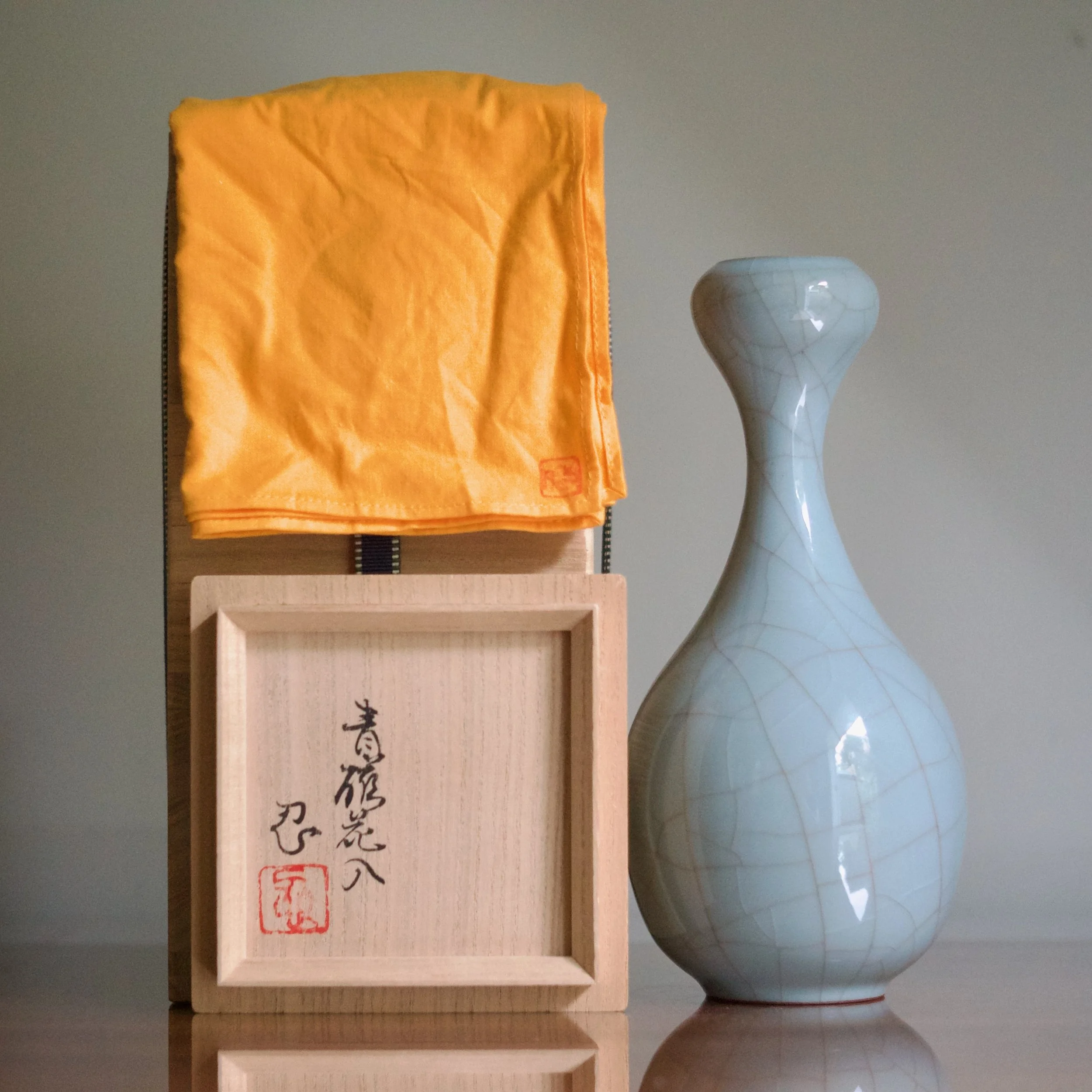
Comes with the signed, stamped, and titled wood box, and stamped wrapping cloth.