Osamu SUZUKI (1926 - 2001)
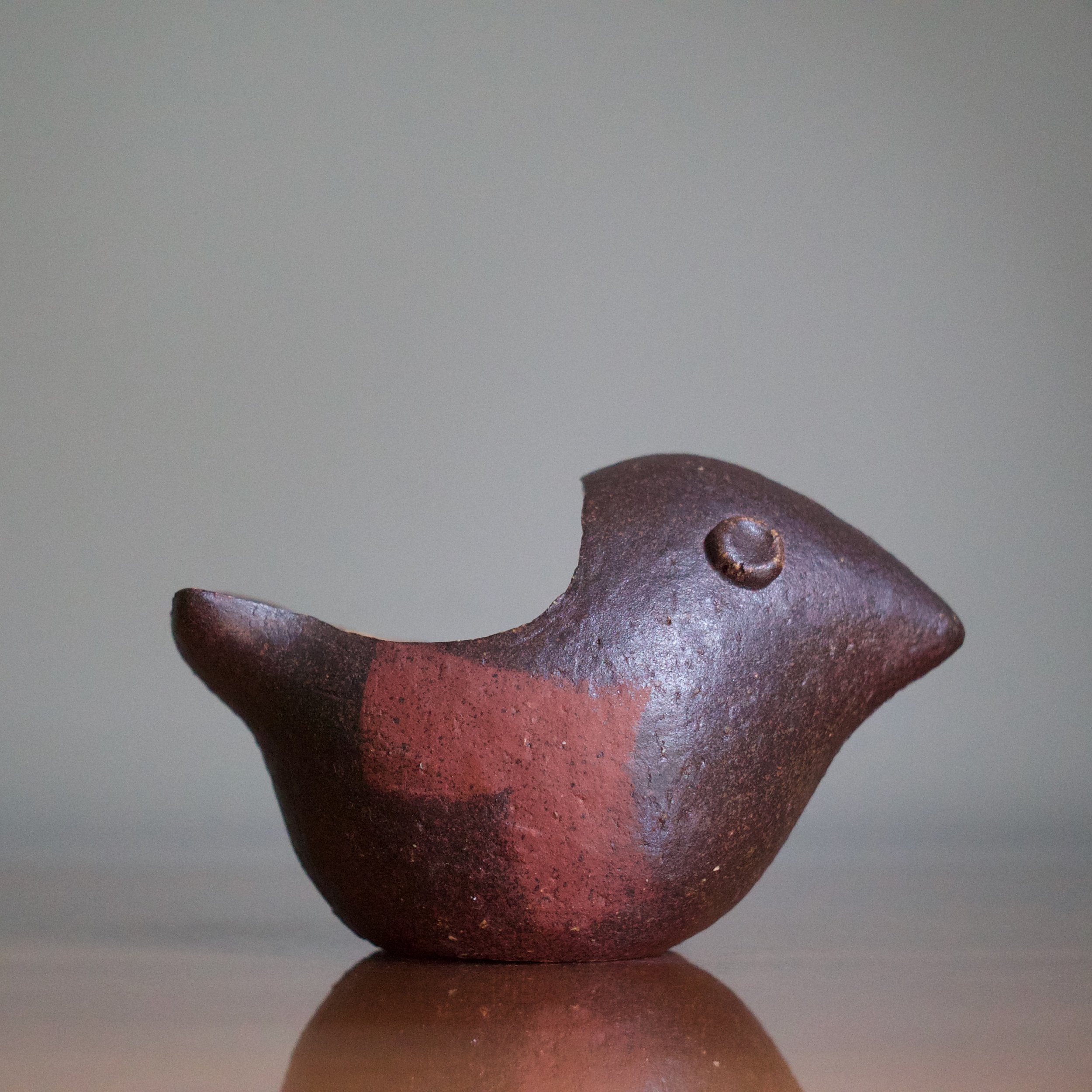
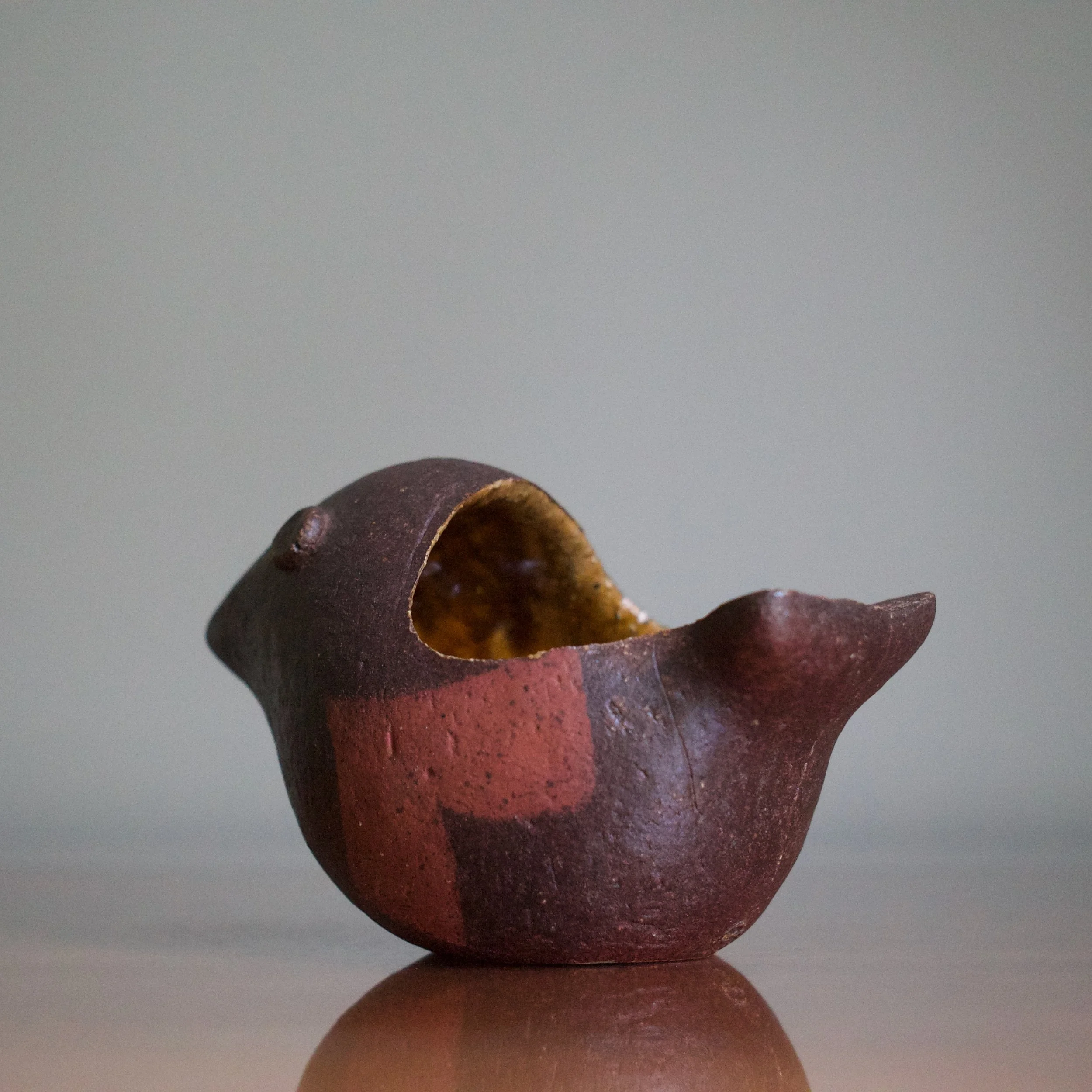
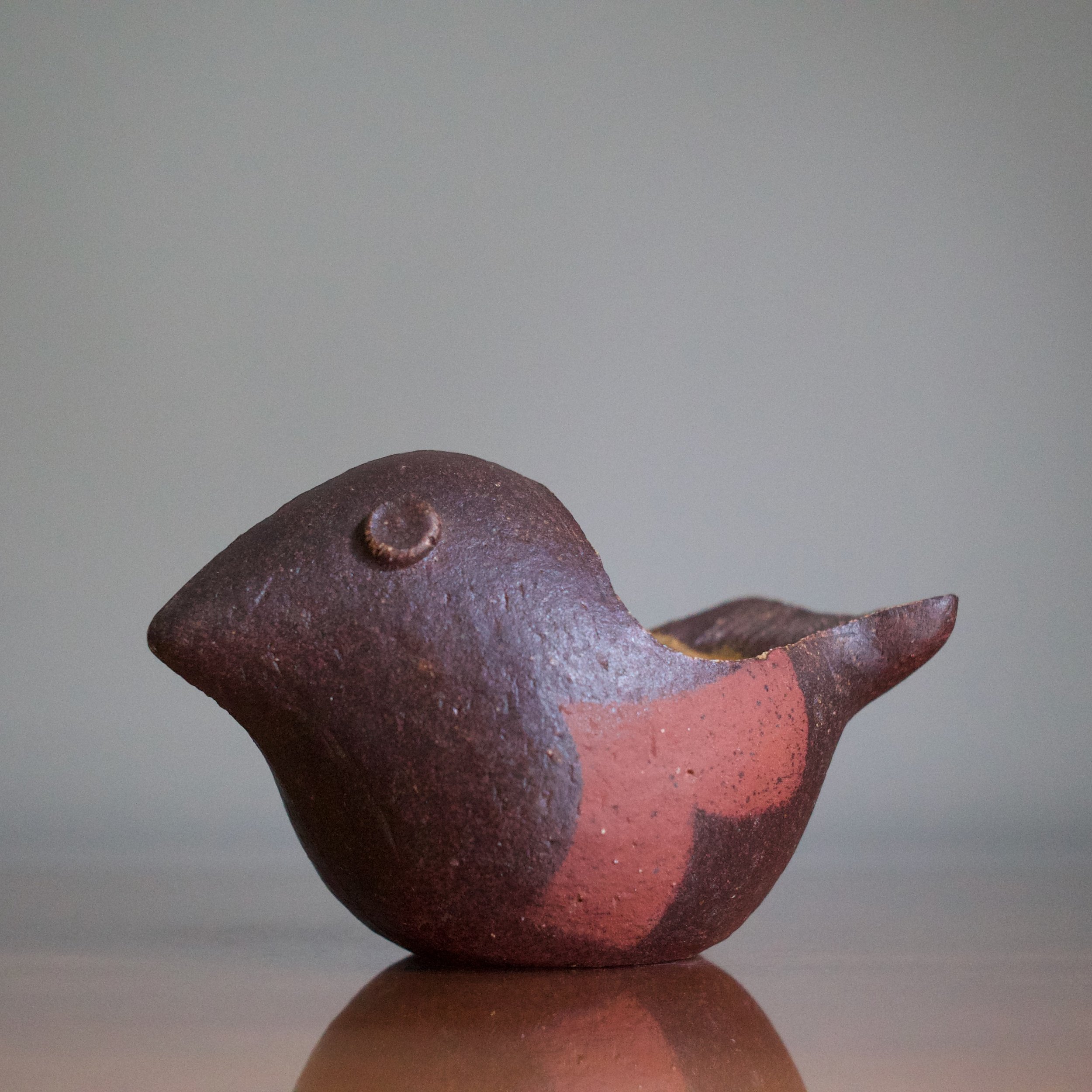
“とり” Bird
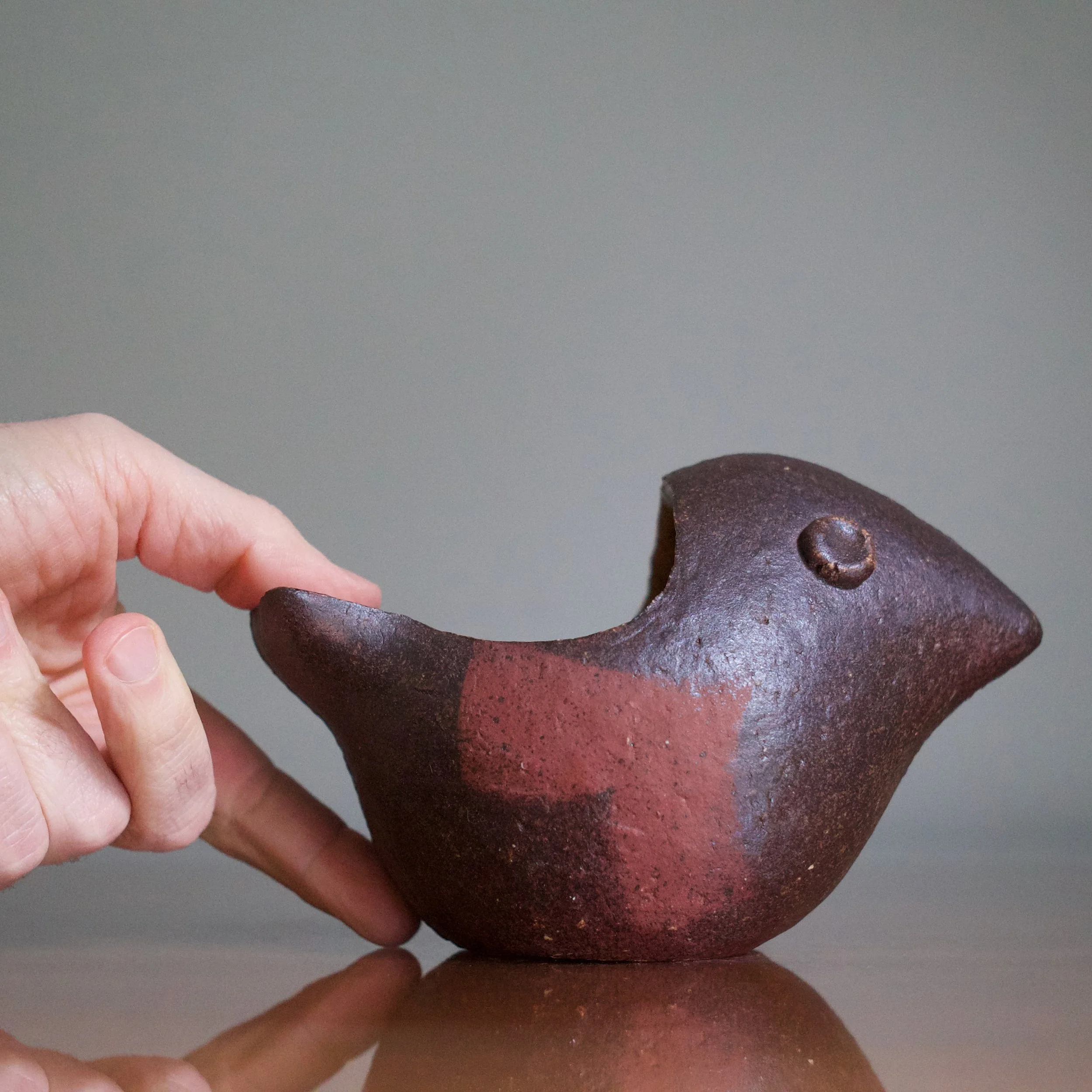
Kyoto; c. 1980’s; 6 1/2” long by 4” deep by 4” tall.
$595 (CAD)
One of the founding members of the influential post-war Sodeisha movement, Osamu Suzuki sought to liberate ceramics from its functional obligations. Inspired by international 20th century artistic movements, Sodeisha saw itself as an avant garde dedicated to exploring the artistic possibilities of clay.
Suzuki began to produce ceramic sculptures that looked entirely modern, intentionally renouncing any reference to Asian traditions that came before. He made a series of objects inspired by animals, abstracted in an attempt to capture the essence of each.
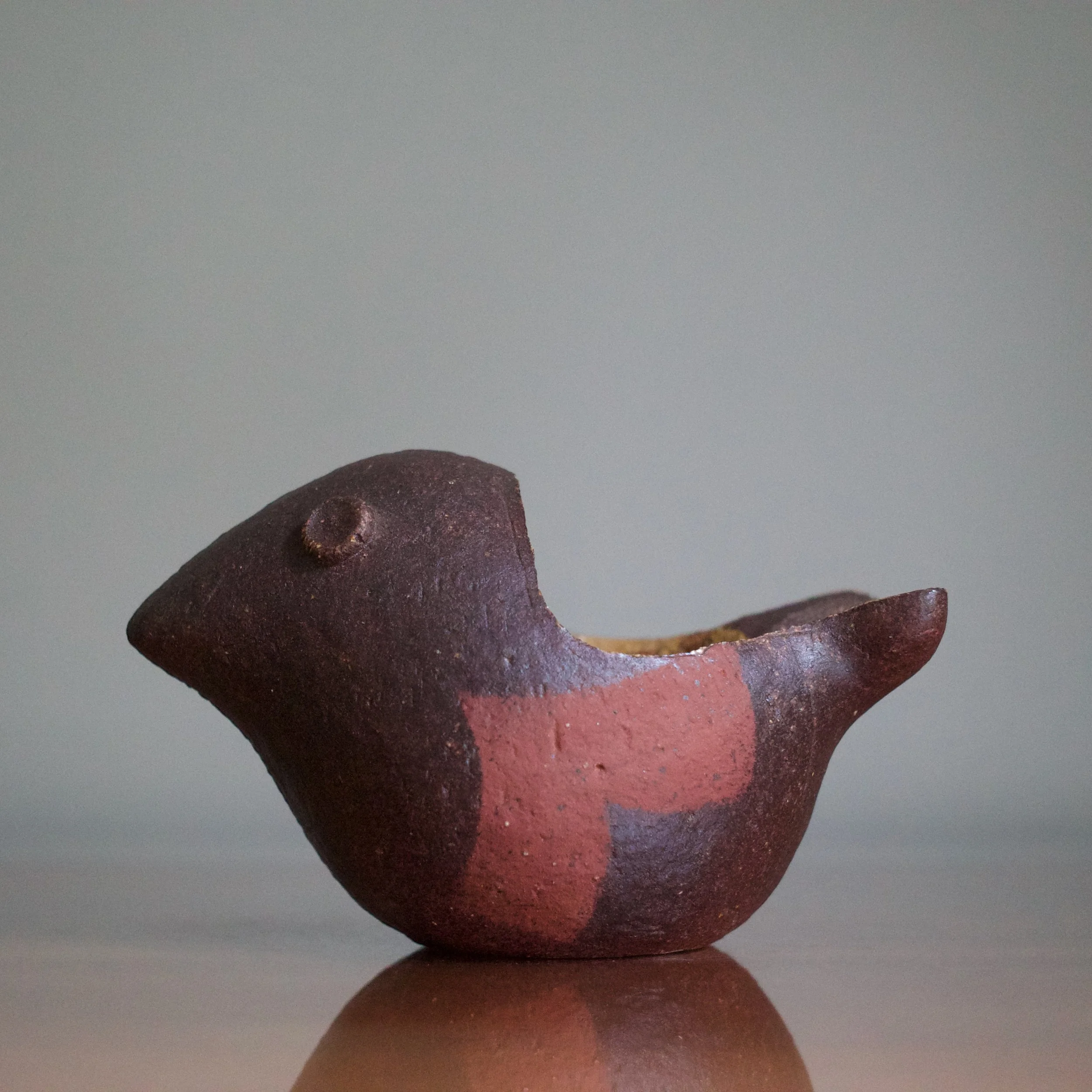
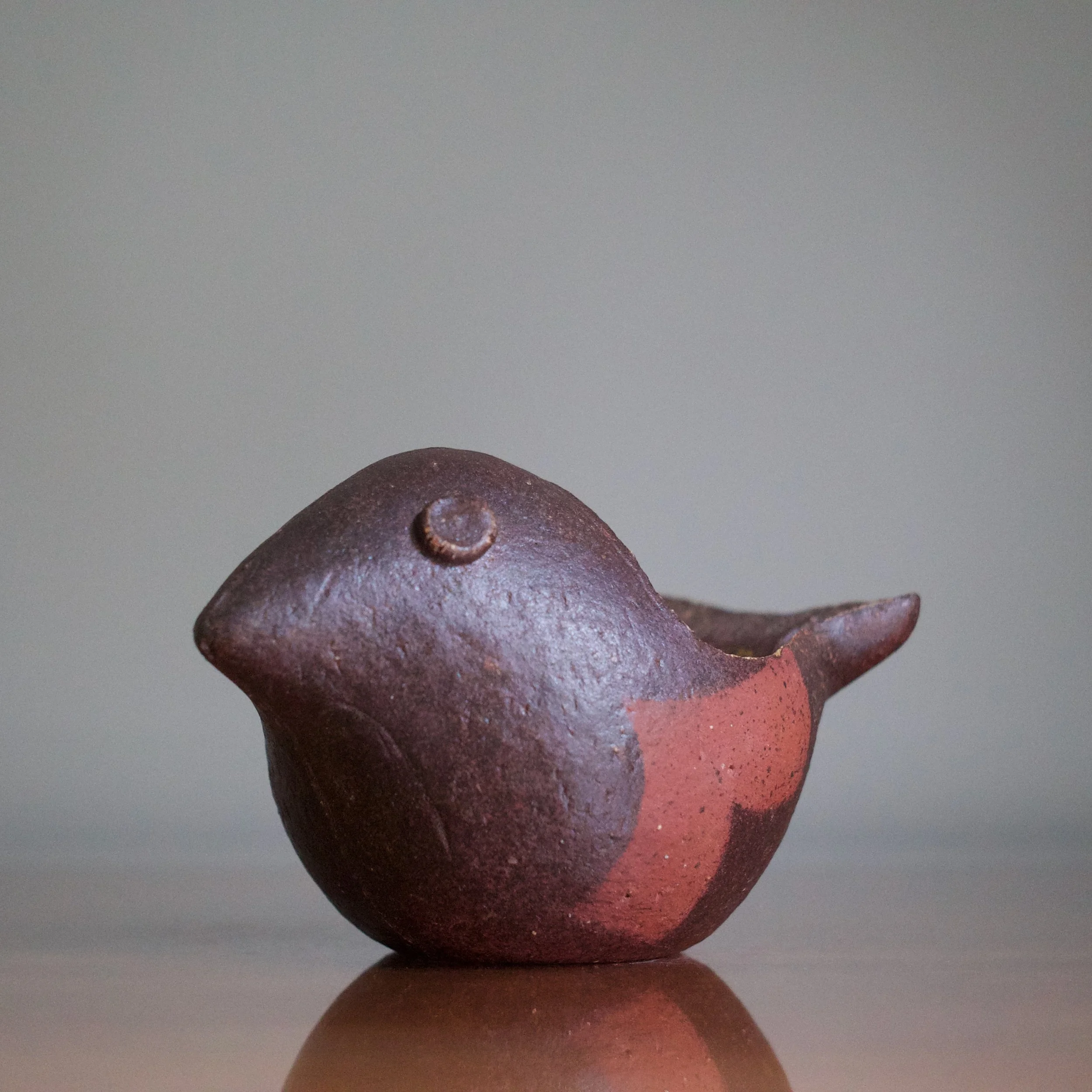
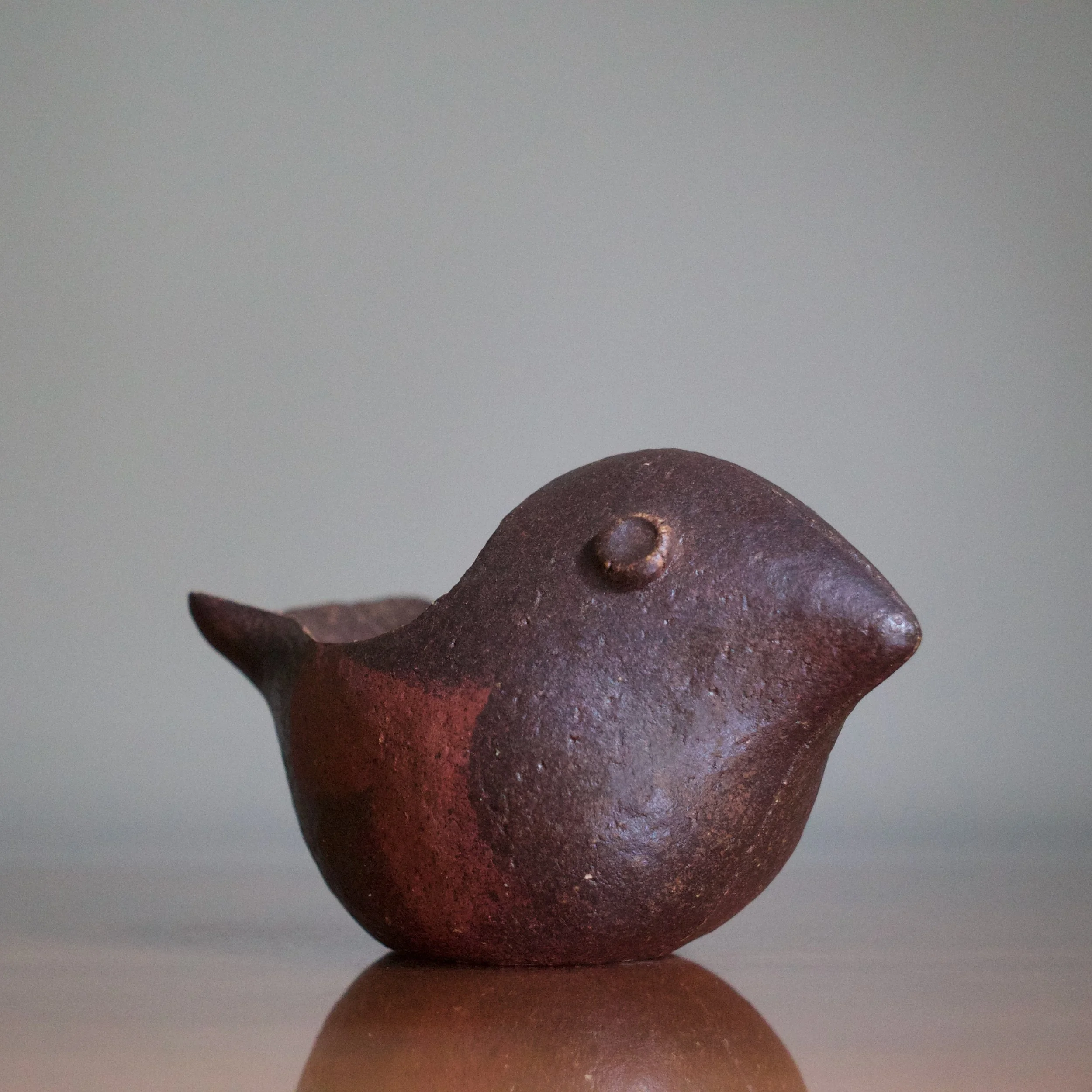
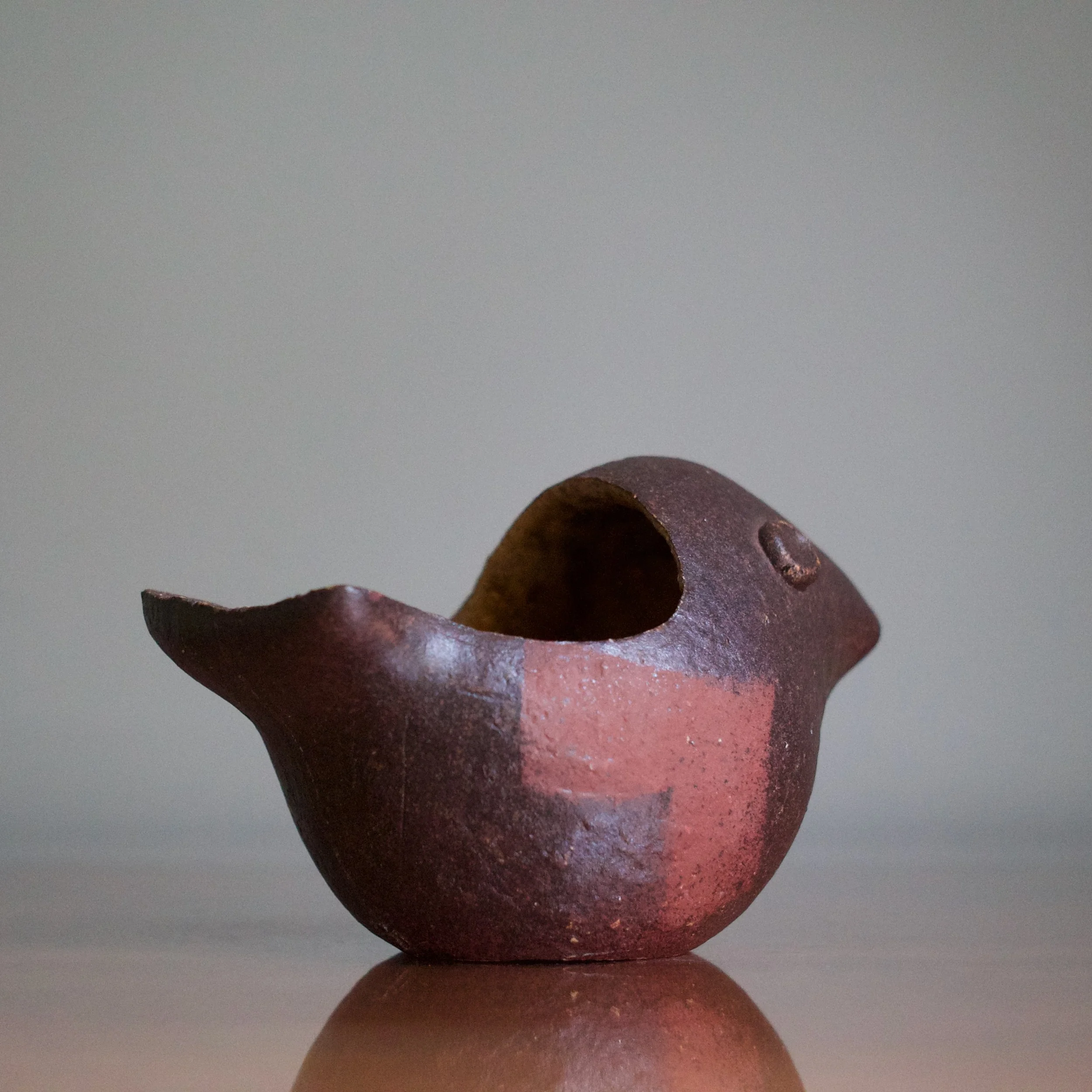
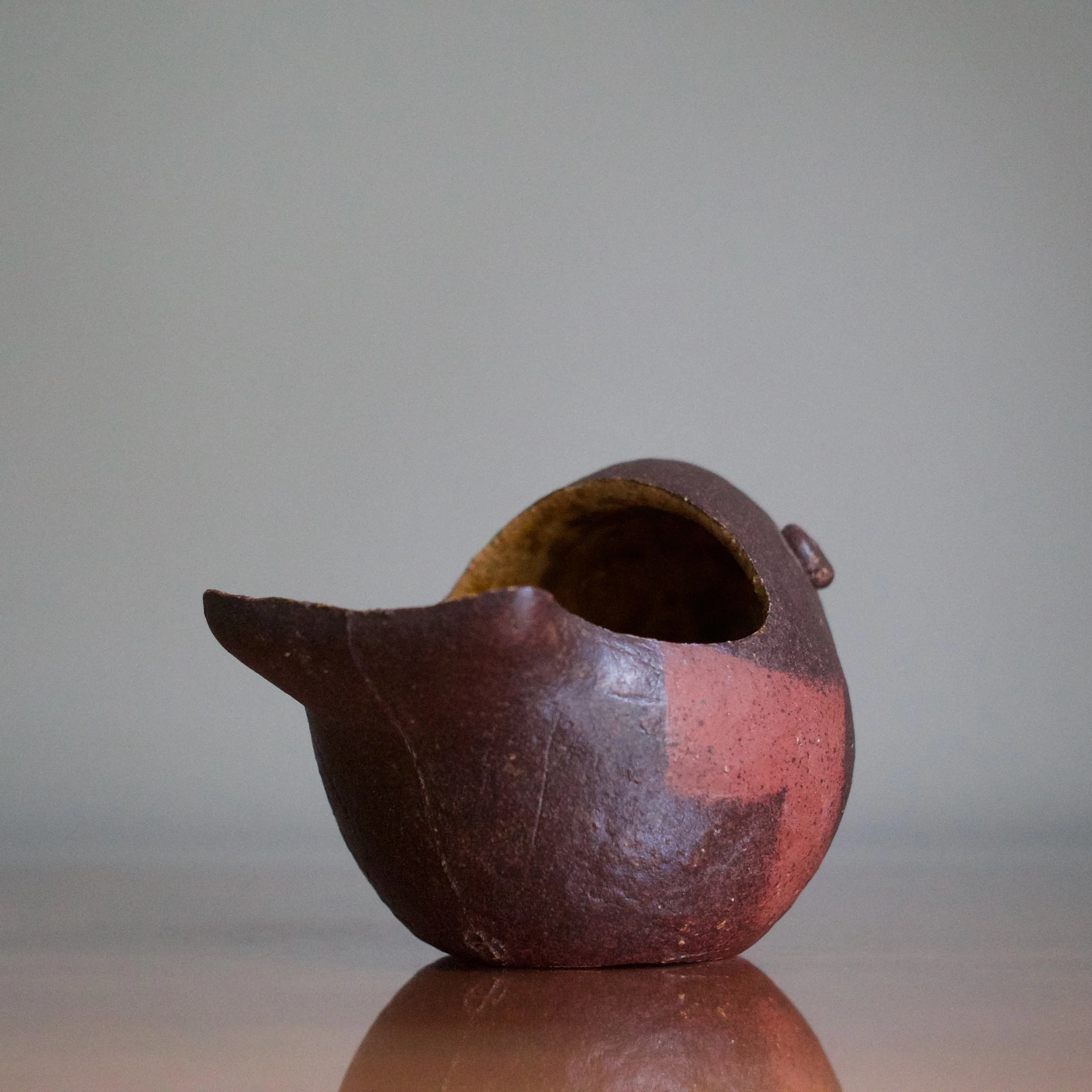
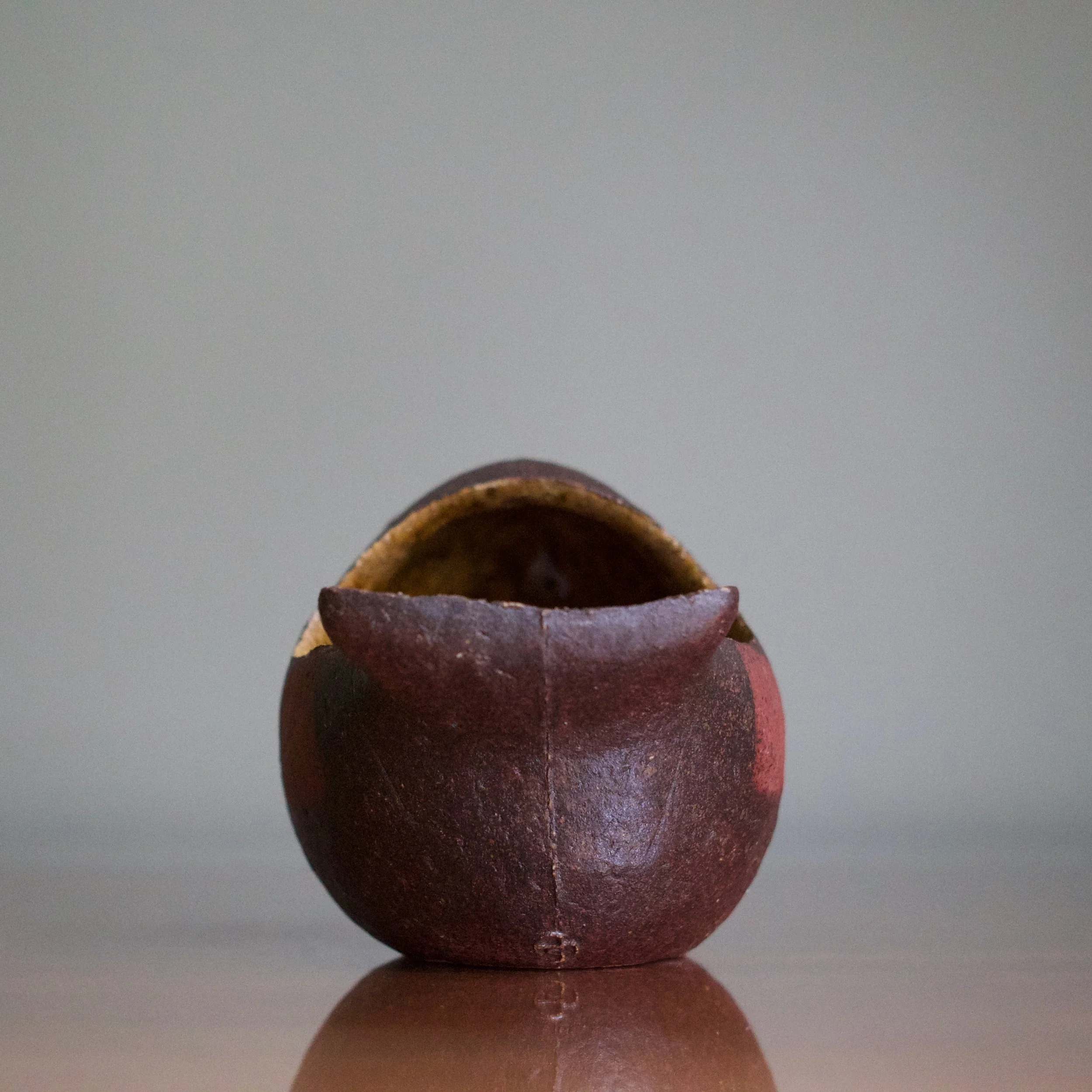
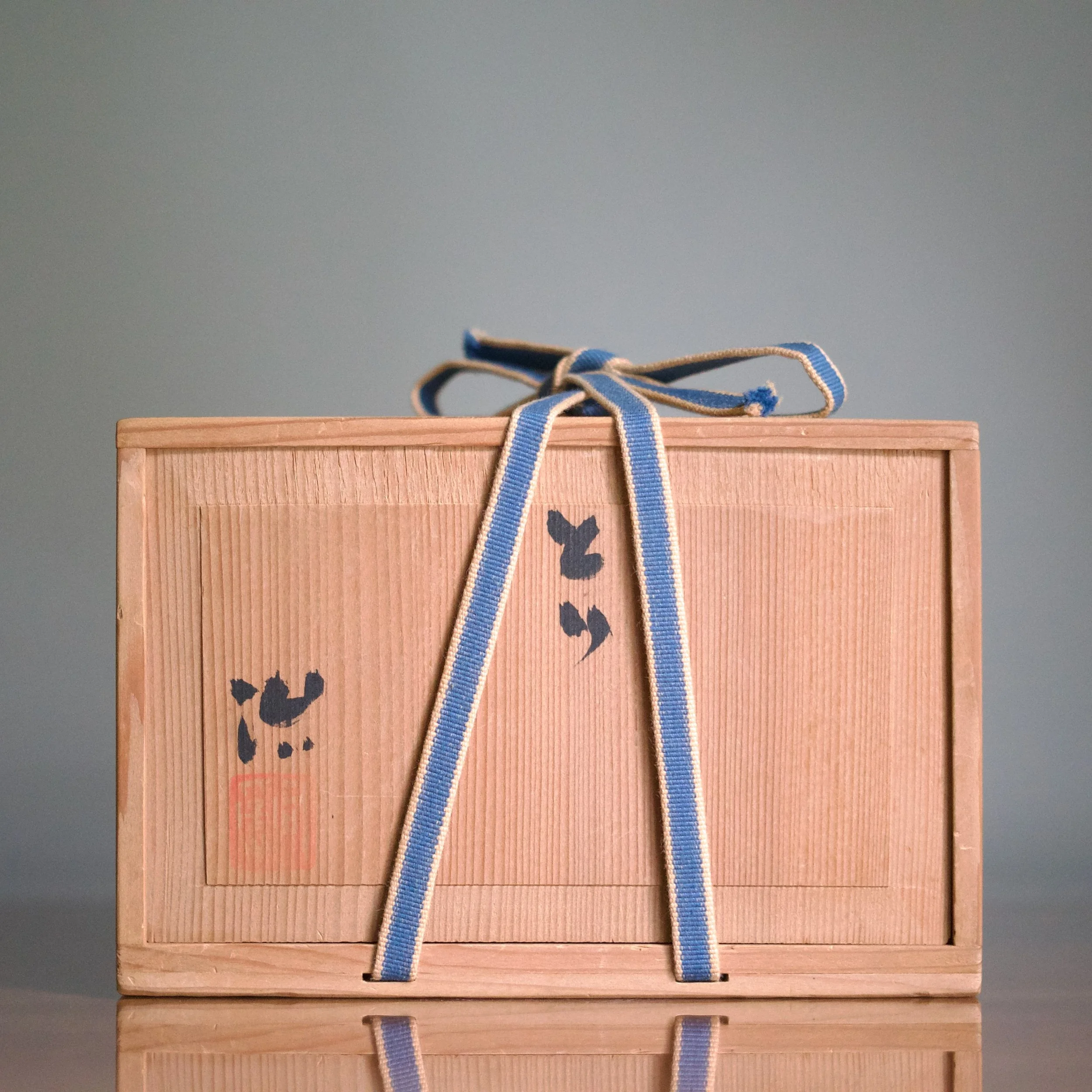
The Sodeisha artists debated whether a piece should have an opening: a closed or open form automatically determines its use. And this ceramic “Bird” plays with this tension between vessel and object. While it is primarily a sculptural bird form, its back is nonetheless open, making itself available for holding flowers or food. Interestingly its wood box is of the drop-front style, most often used to store okimono, or decorative objects.
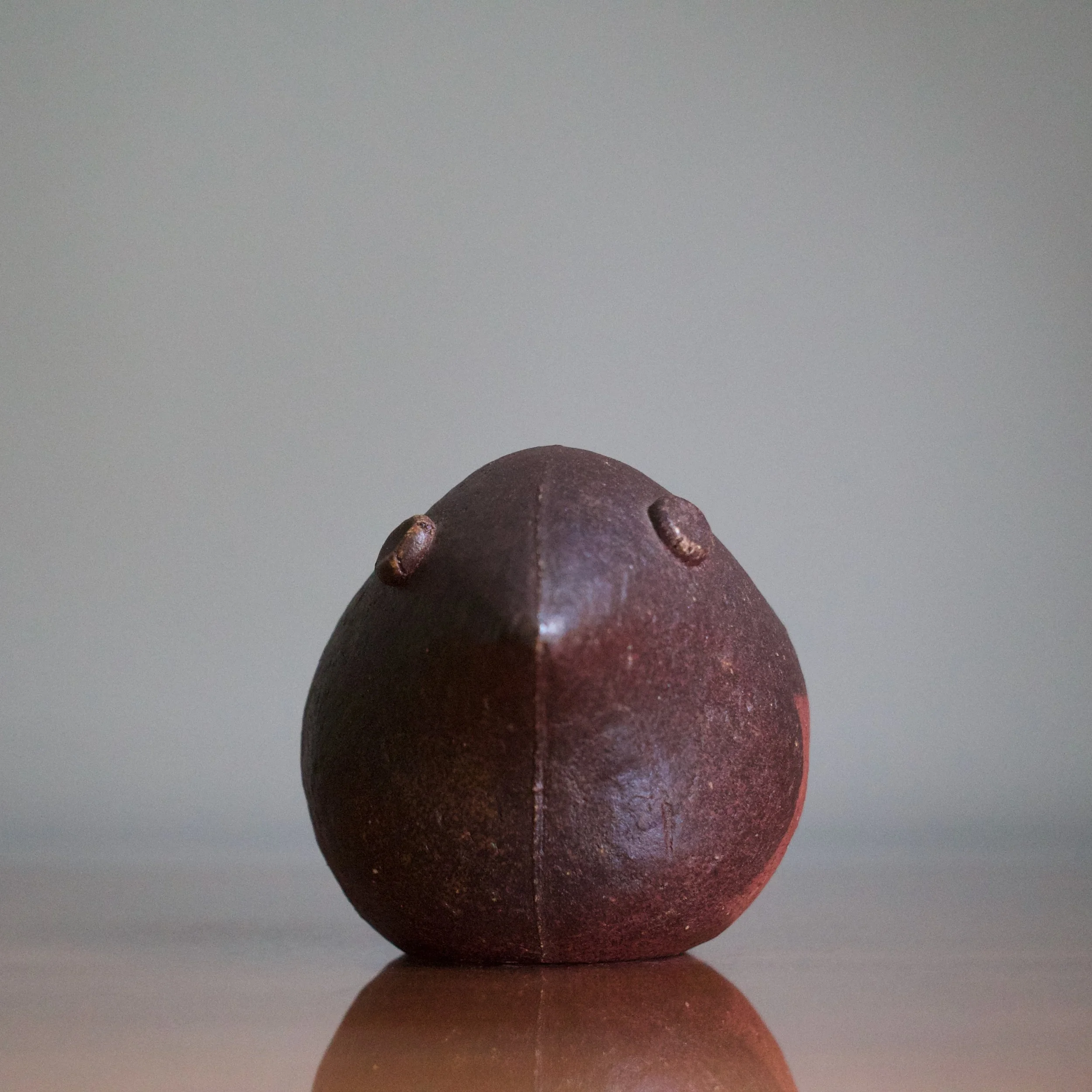
Aside from debating clay's purpose, Suzuki’s interest also lies in it as a material. He uses a soft, iron-rich clay body, painted outside with an iron-oxide slip, except for the wings which reveal the orange clay underneath. But he coated the interior with a warm golden glaze similar to an ame-gusuru. And this contrast seems to emphasize the bird’s interior. Inside is turned outside; positive becomes negative.
Comes with the signed, stamped, and titled wood box.