Masayuki URAGUCHI (1964 -)
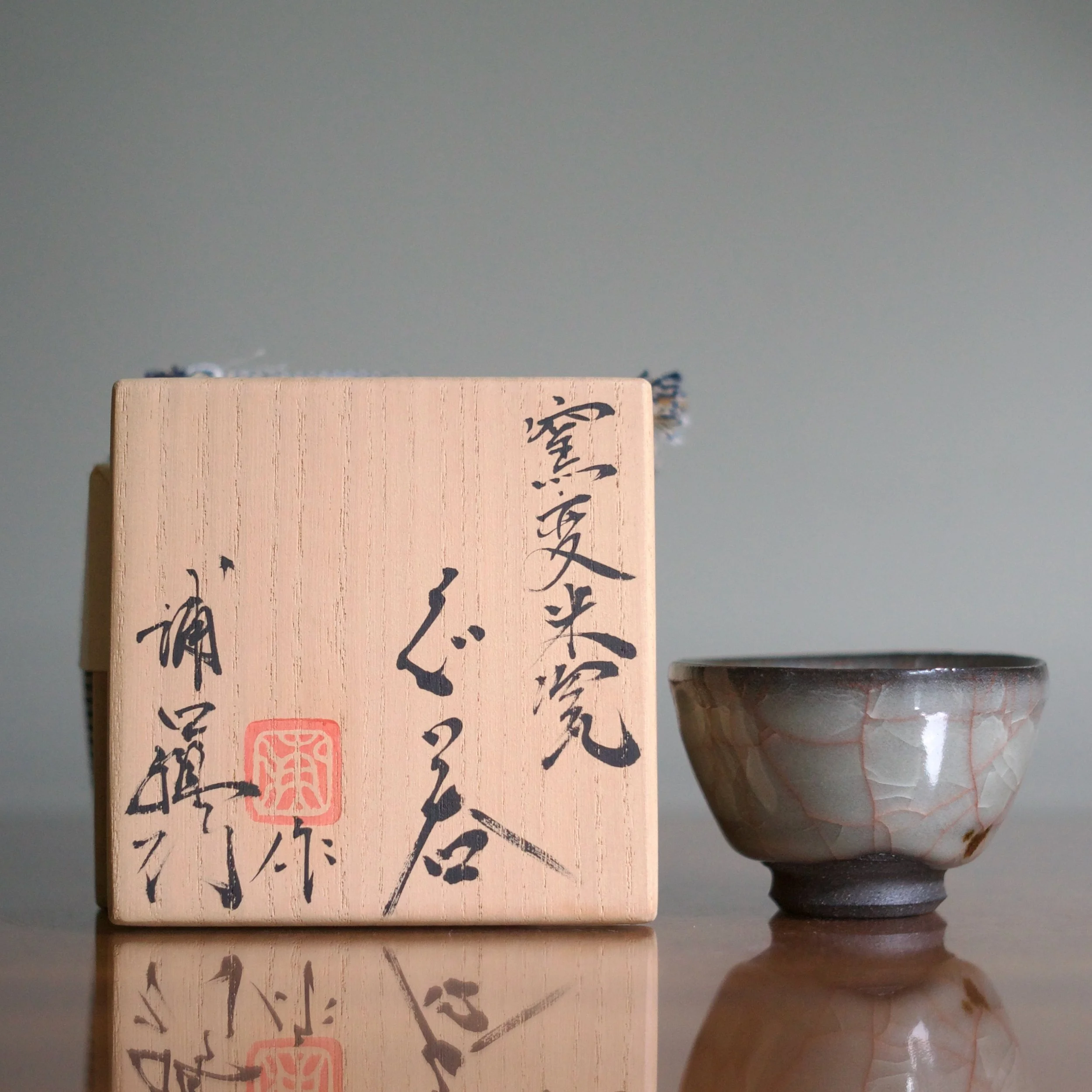
“窯変米瓷ぐい呑” beiji yohen sake cup
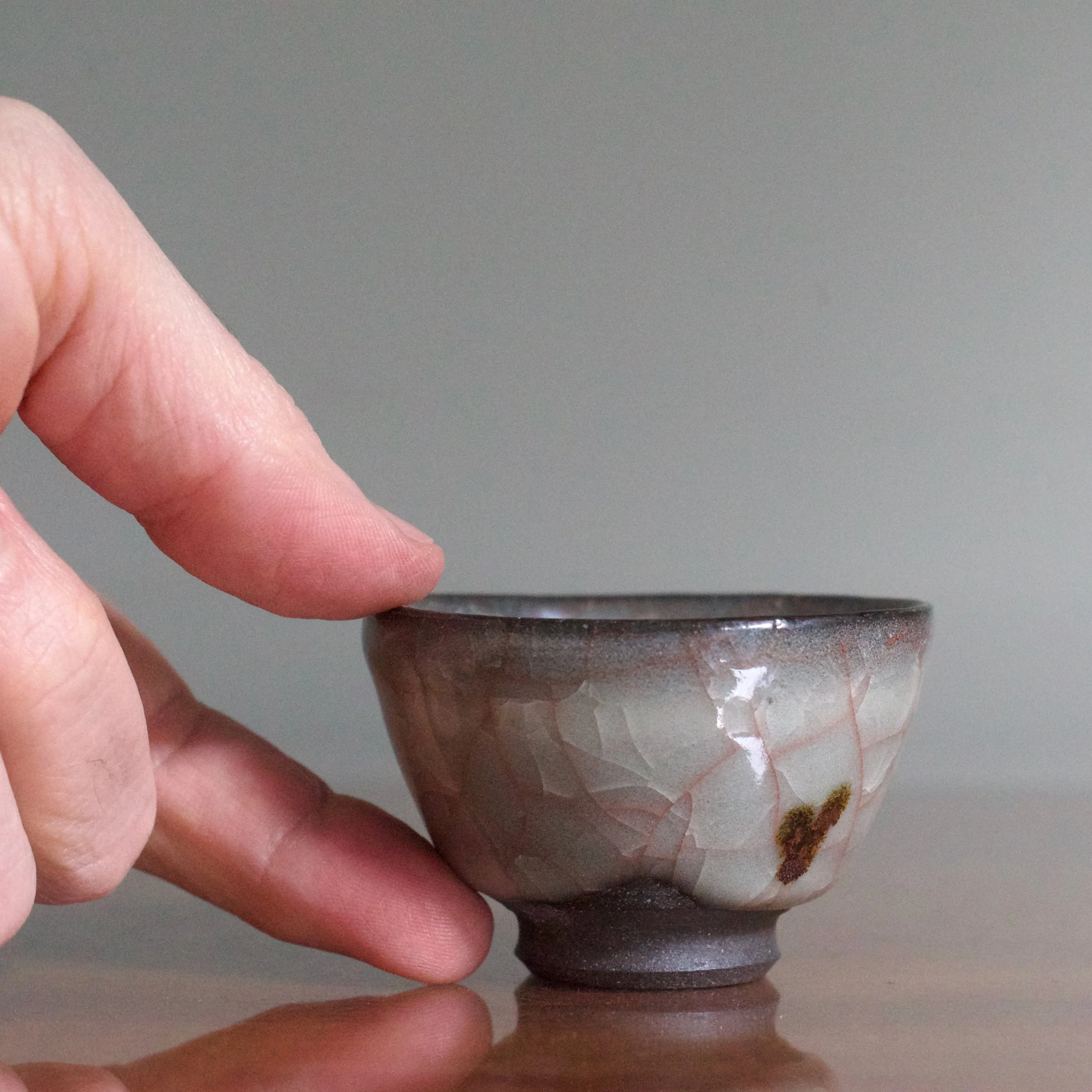
Ishioka, Ibaraki; 2006; 2 1/2” wide by 1 5/8” high.
$385 (CAD)
Masayuki Uraguchi is known for exploring the possibilities of celadon. While at Tokyo University of Art, he studied with the great celadon master Miura Koheiji. And after he handled classic Song dynasty celadons in museums and at old Chinese kiln sites, the rest was history. Uraguchi caught “celadon fever.”
His early career saw him master the pure and elegant soft, blue-green celadon colours. His clay bodies have remained iron-rich: smooth and porcelain-like, they range from light brown to nearly black. But he would expand his glaze repertoire into a staggering variety of colours.
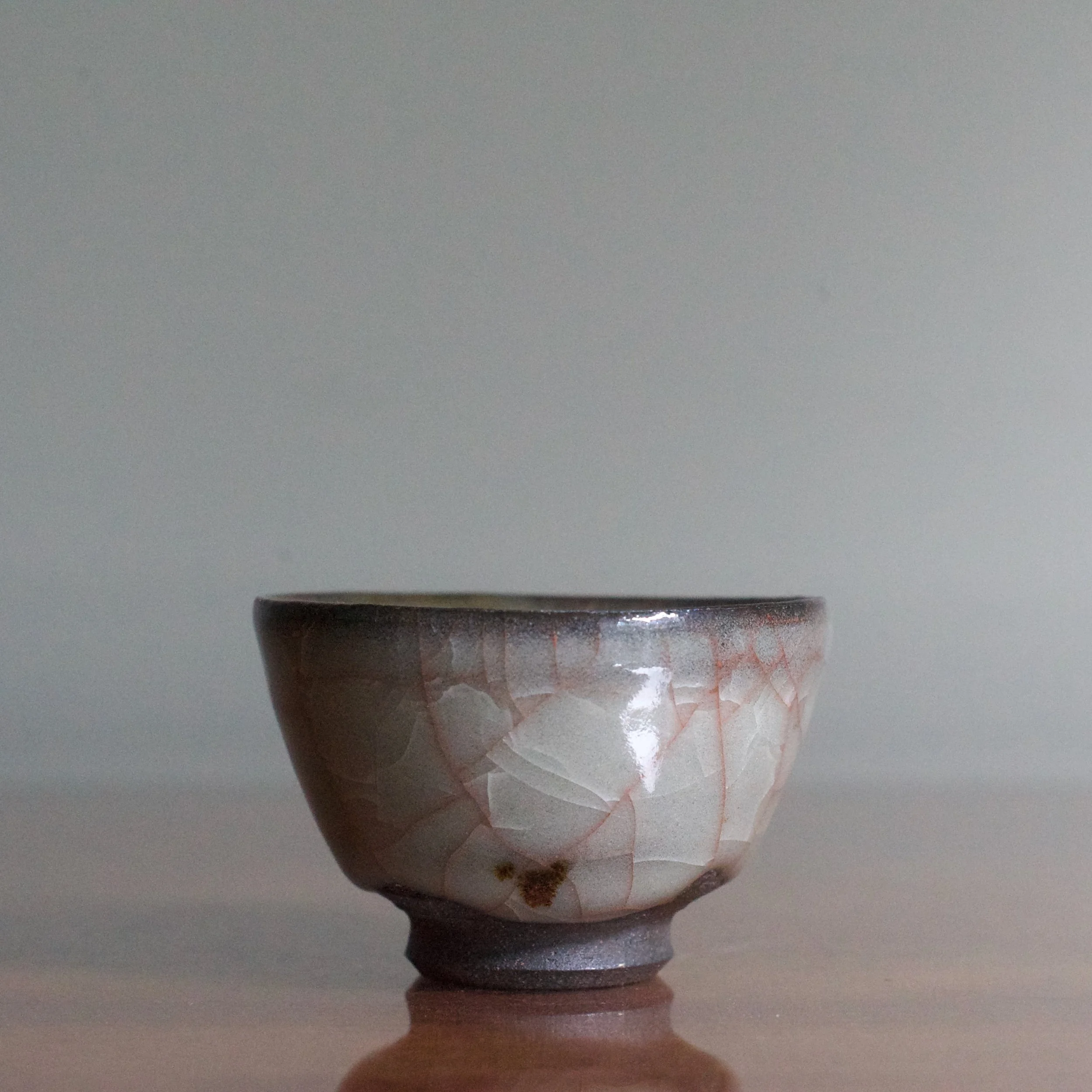
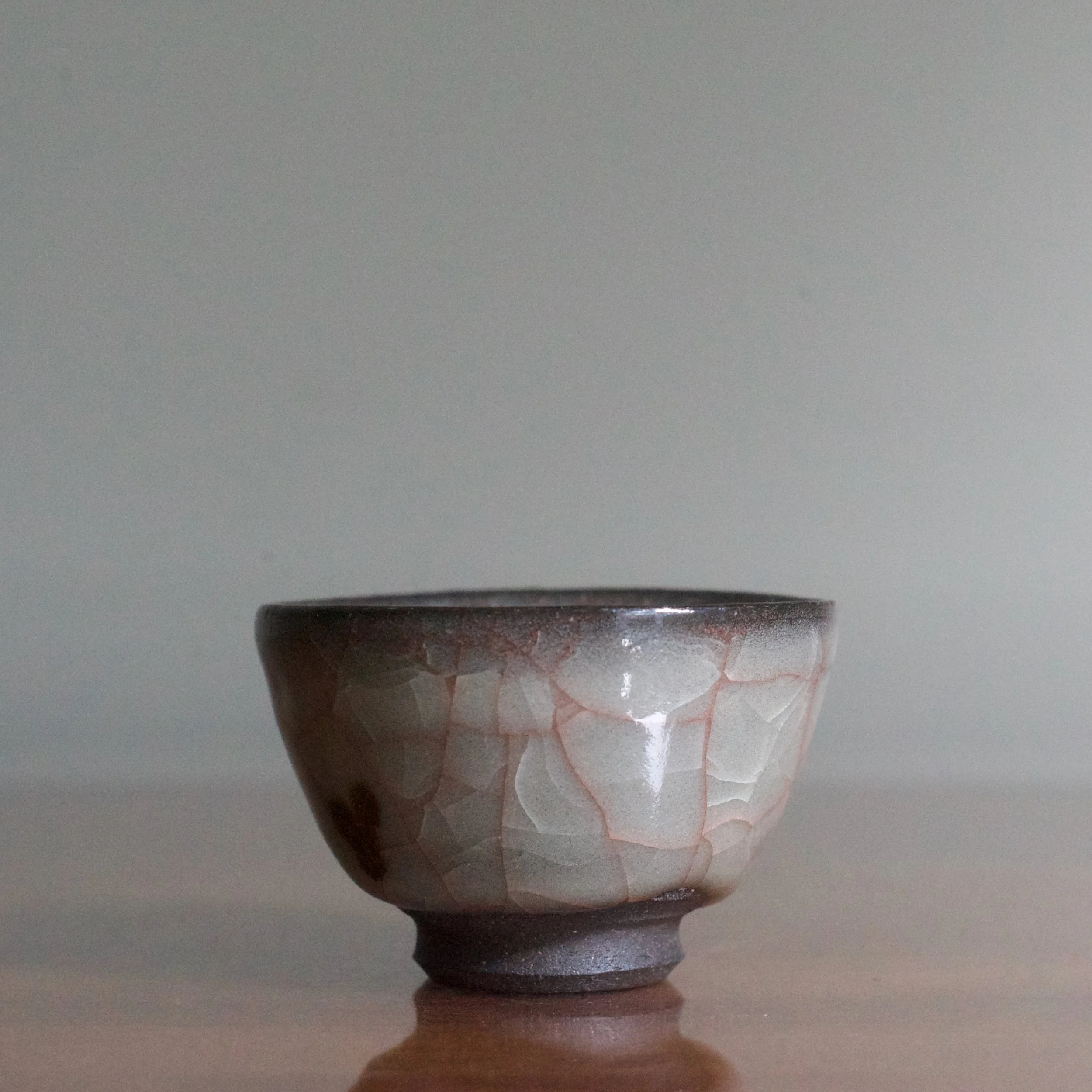
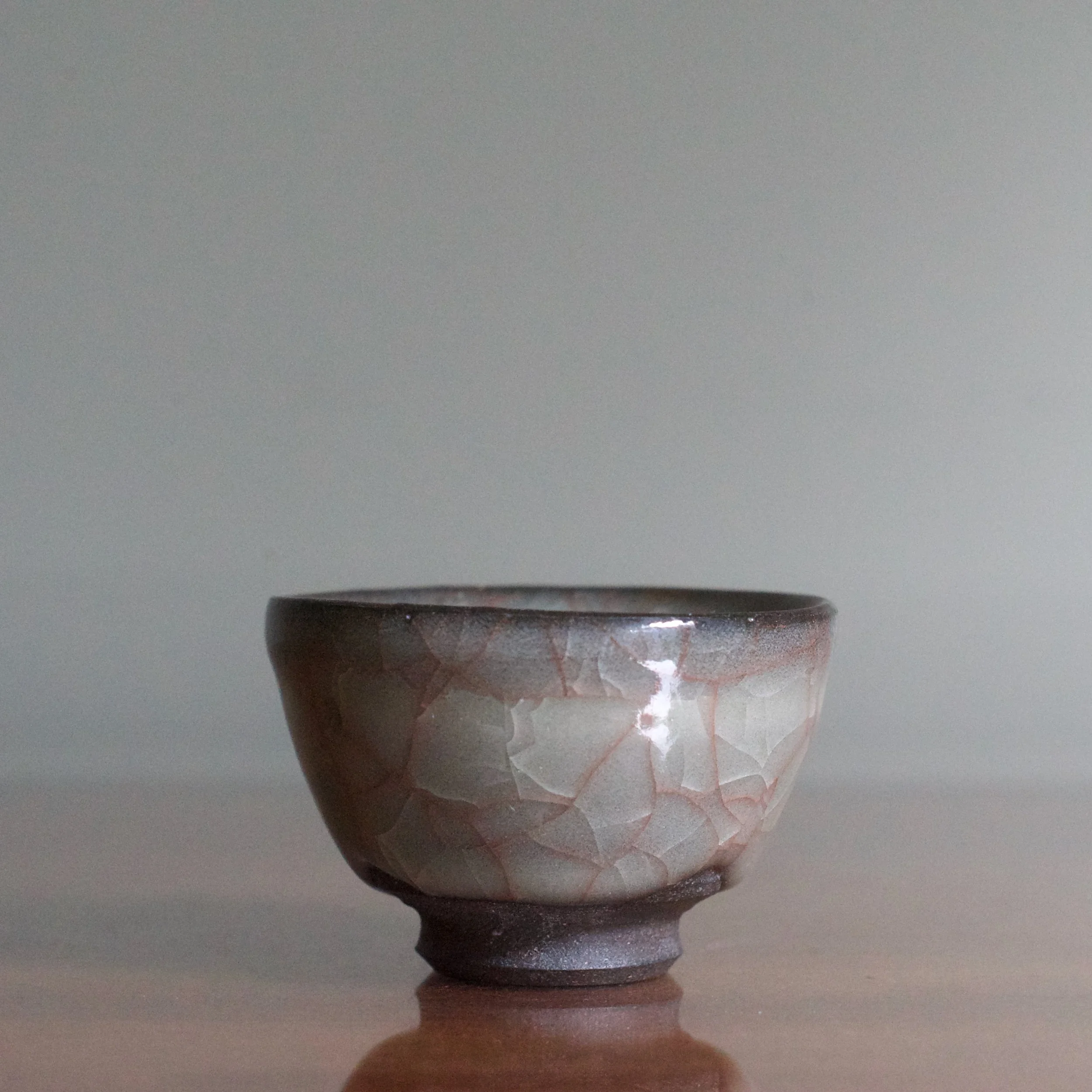
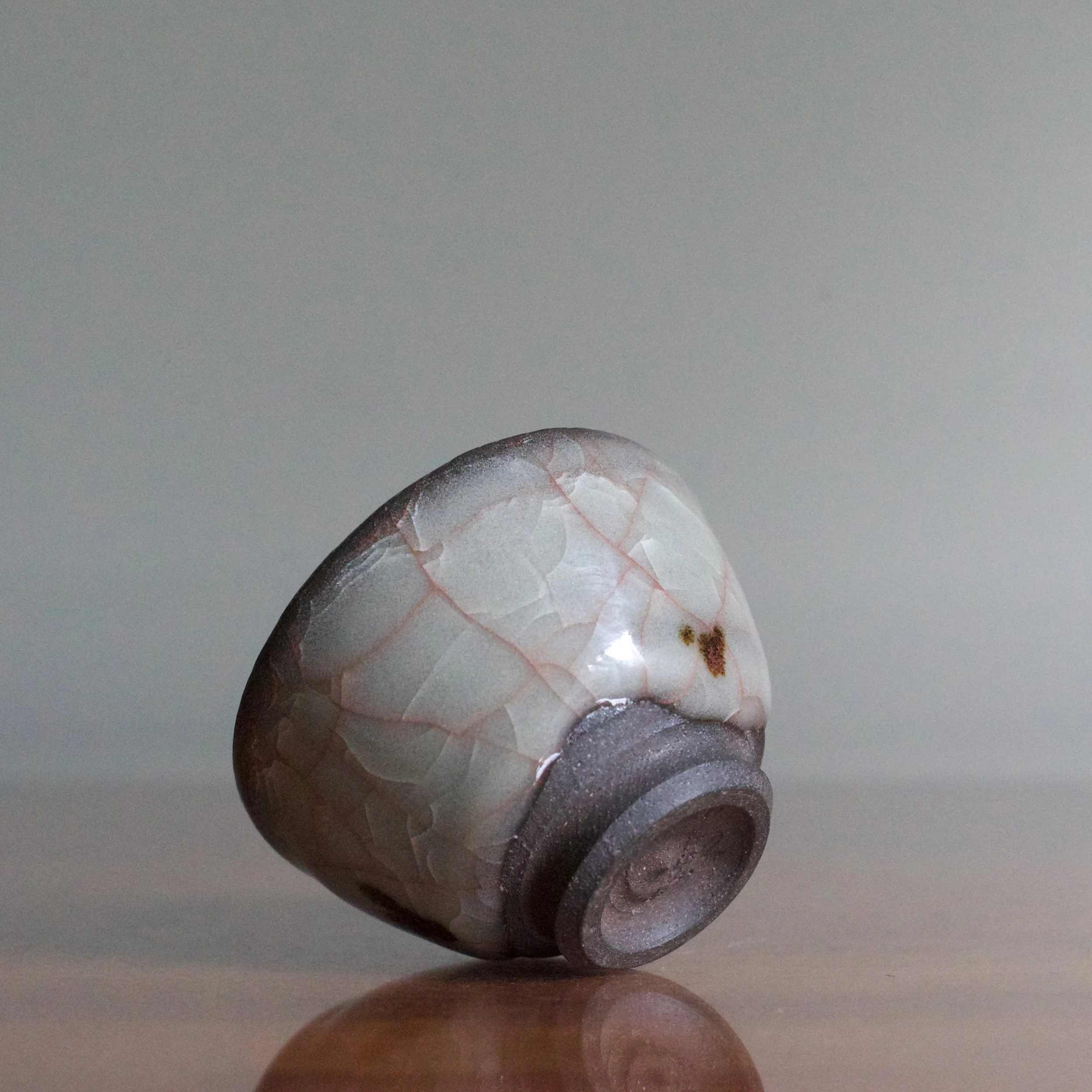
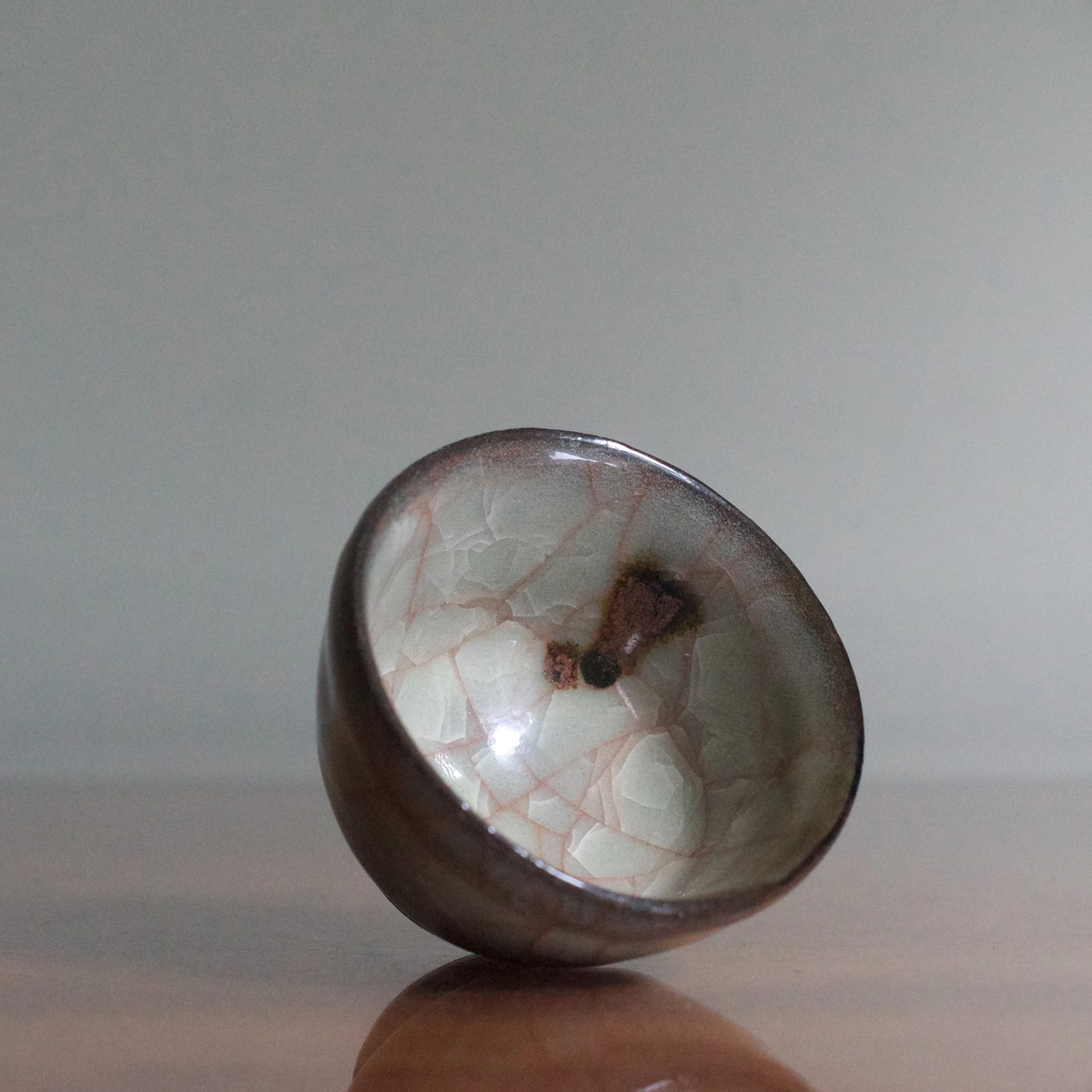
From his mid-career, this cup’s milky grey-brown glaze is a good example of Uraguchi’s range. He calls this “米瓷" or beiji, literally "rice celadon” likely referring to the colour of rice husks. I’m more used to the term “米色瓷” beishokuji or "rice-coloured celadon." Perhaps the difference is only just one less character - not insignificant for a potter whose descriptions can get very lengthy for a small box’s lid.
The toning in the celadon is likely the result of iron in the clay and glaze, firing at the highest temperatures, and exposure (or lack of) to oxygen at key moments during firing. And like many of his other celadons, Uraguchi used pigments post-firing to “dye” his crazing. For this cup he probably used bengara - an iron-oxide ochre pigment - to colour the crackle in tones of brown, purple, and red.
The yohen or kiln effects is probably the halos in and outside the rim. This piece also displays black splashes of iron-oxide, referred to as tobi or “flying” effects. Perhaps also for simplicity Uraguchi didn’t note this detail on this cup’s box. Case in point, this small cup’s celadon combines a vast array of qualities, almost too many to mention.
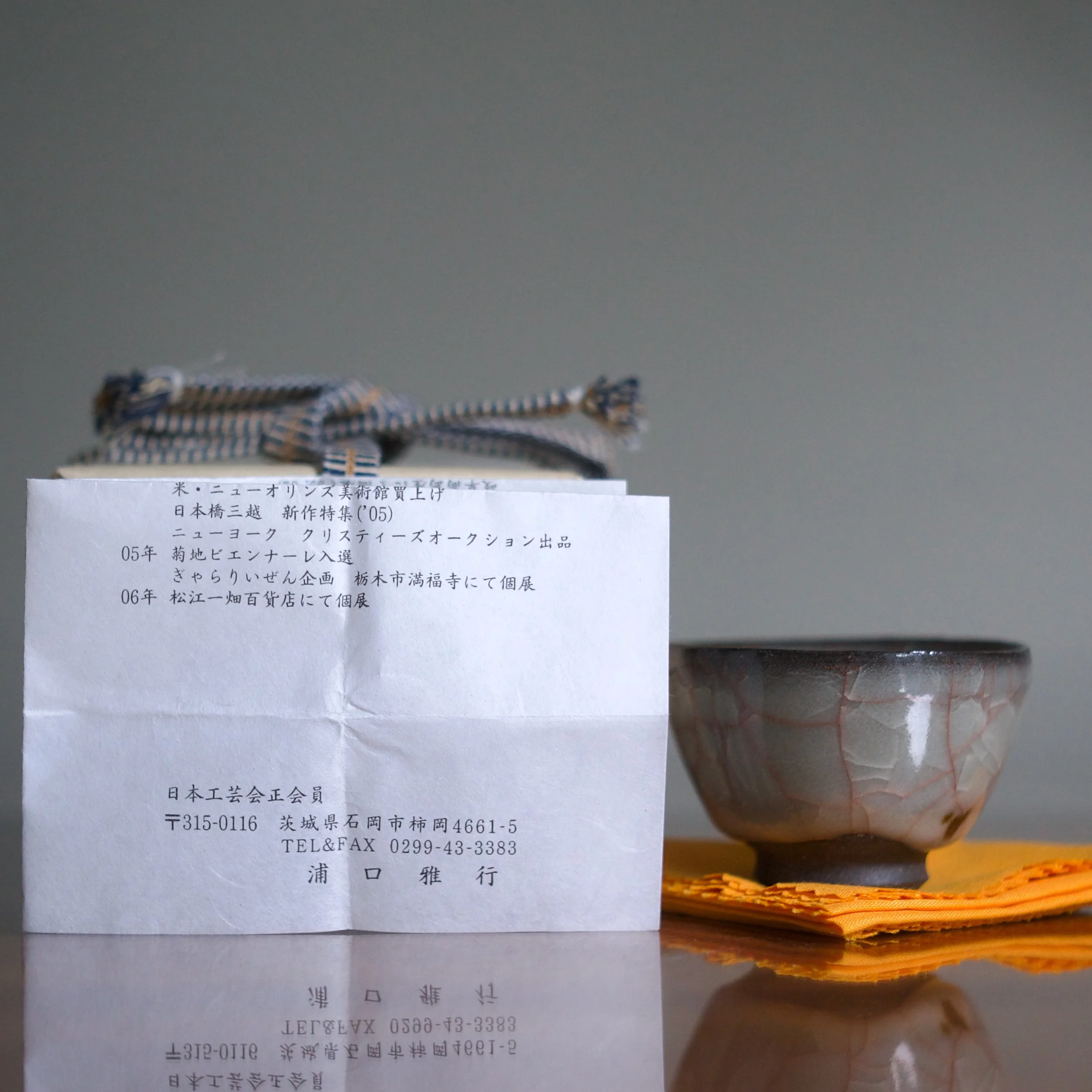
Comes with the signed, stamped, and titled wood box, stamped wrapping cloth, and CV.