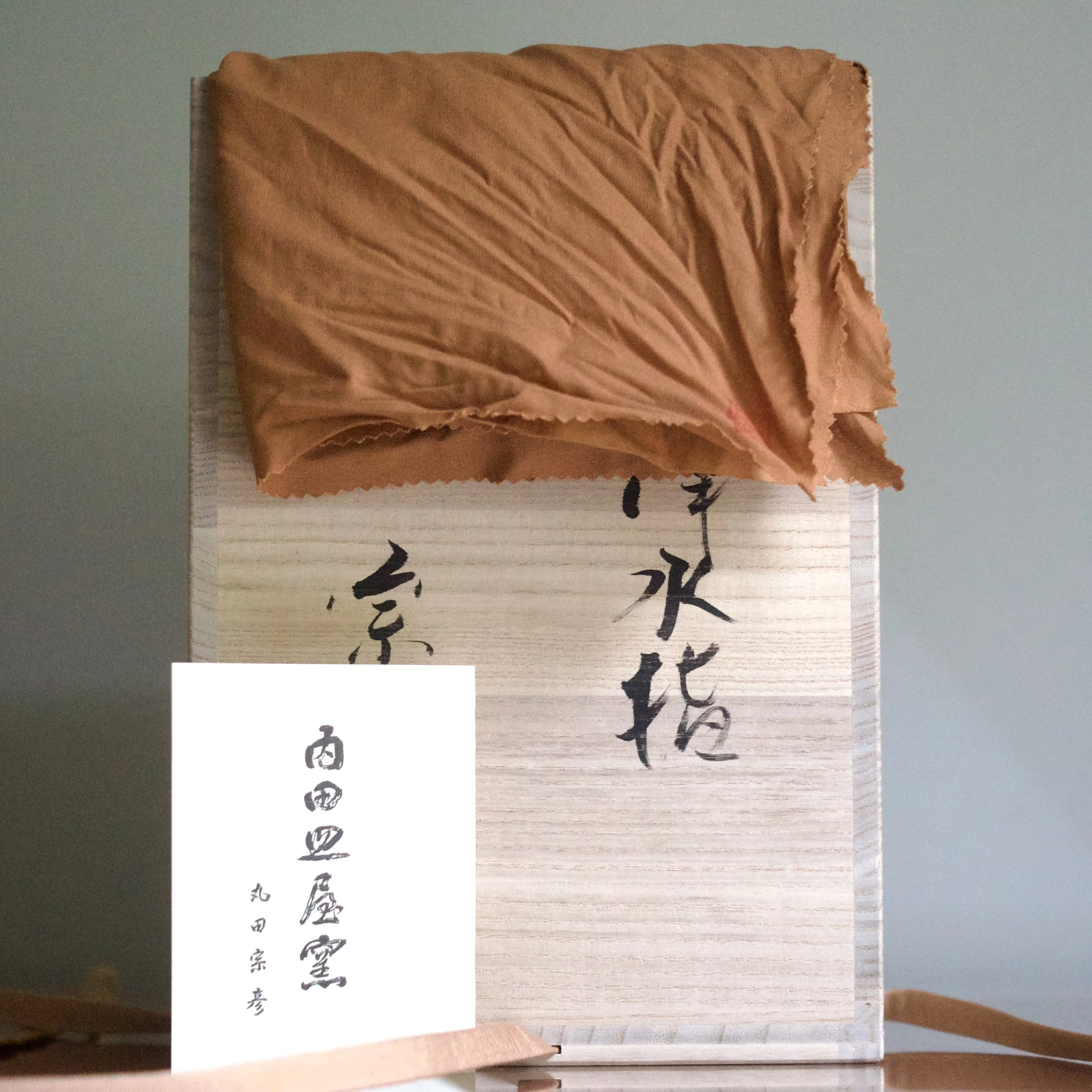
Munehiko MARUTA (1961 -)
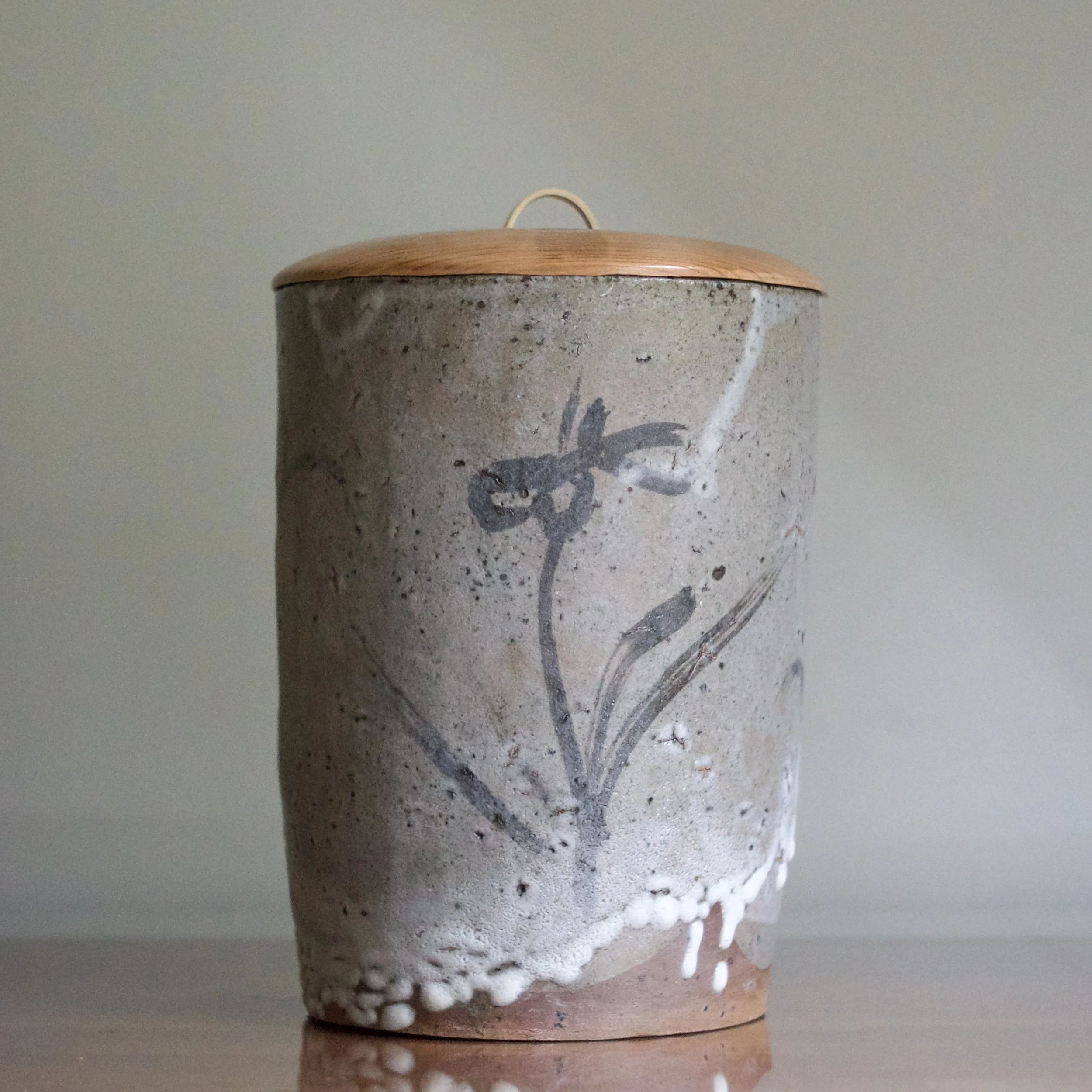
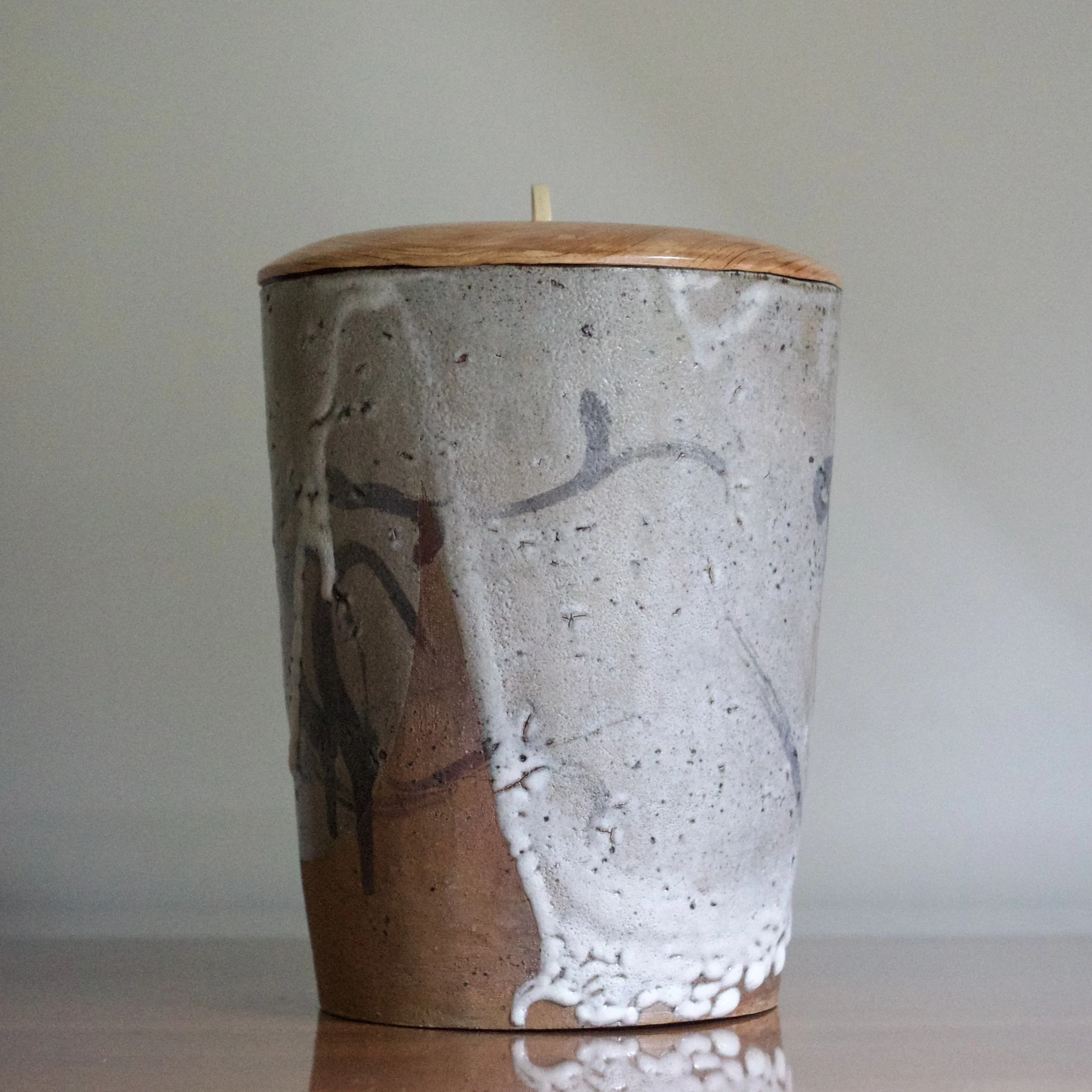
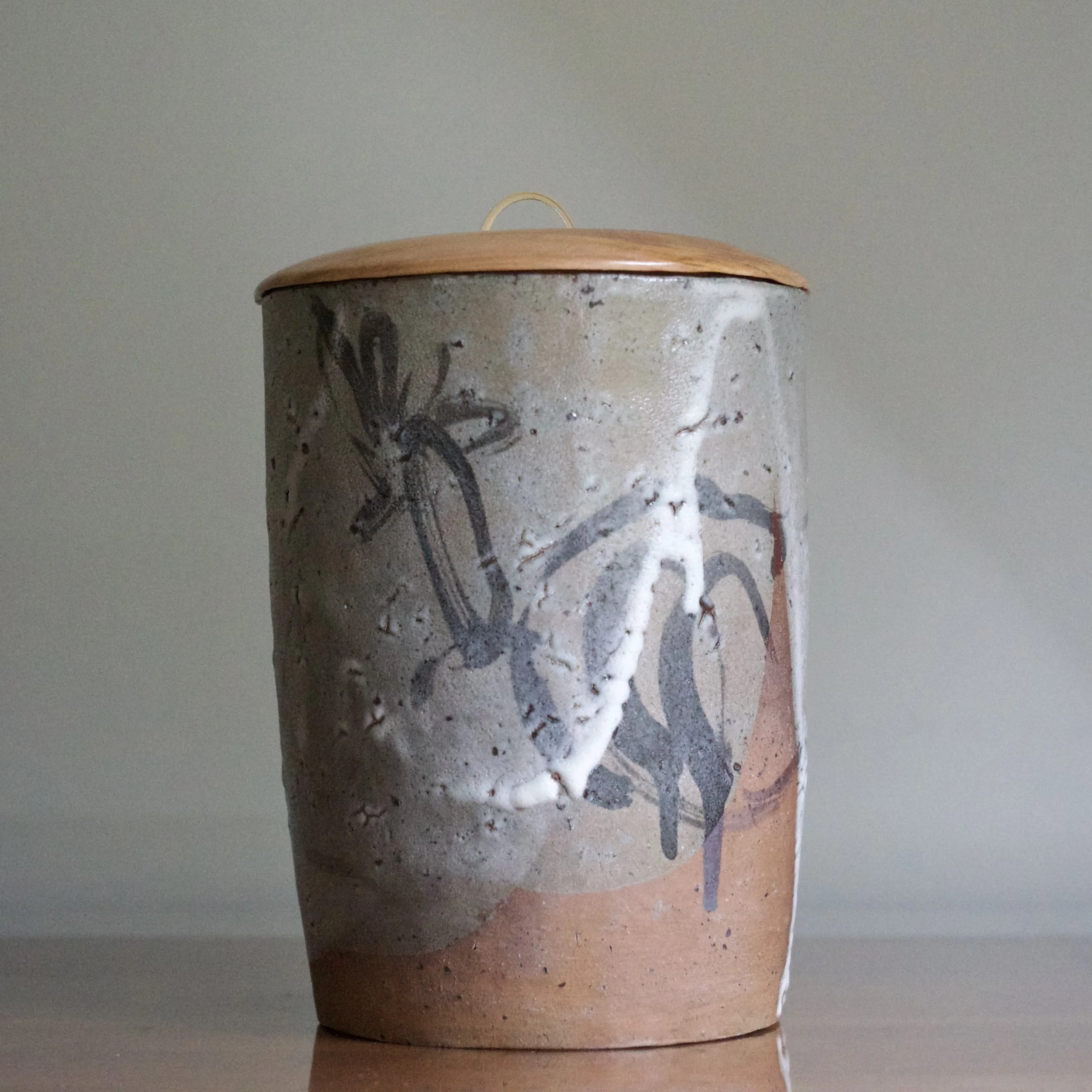
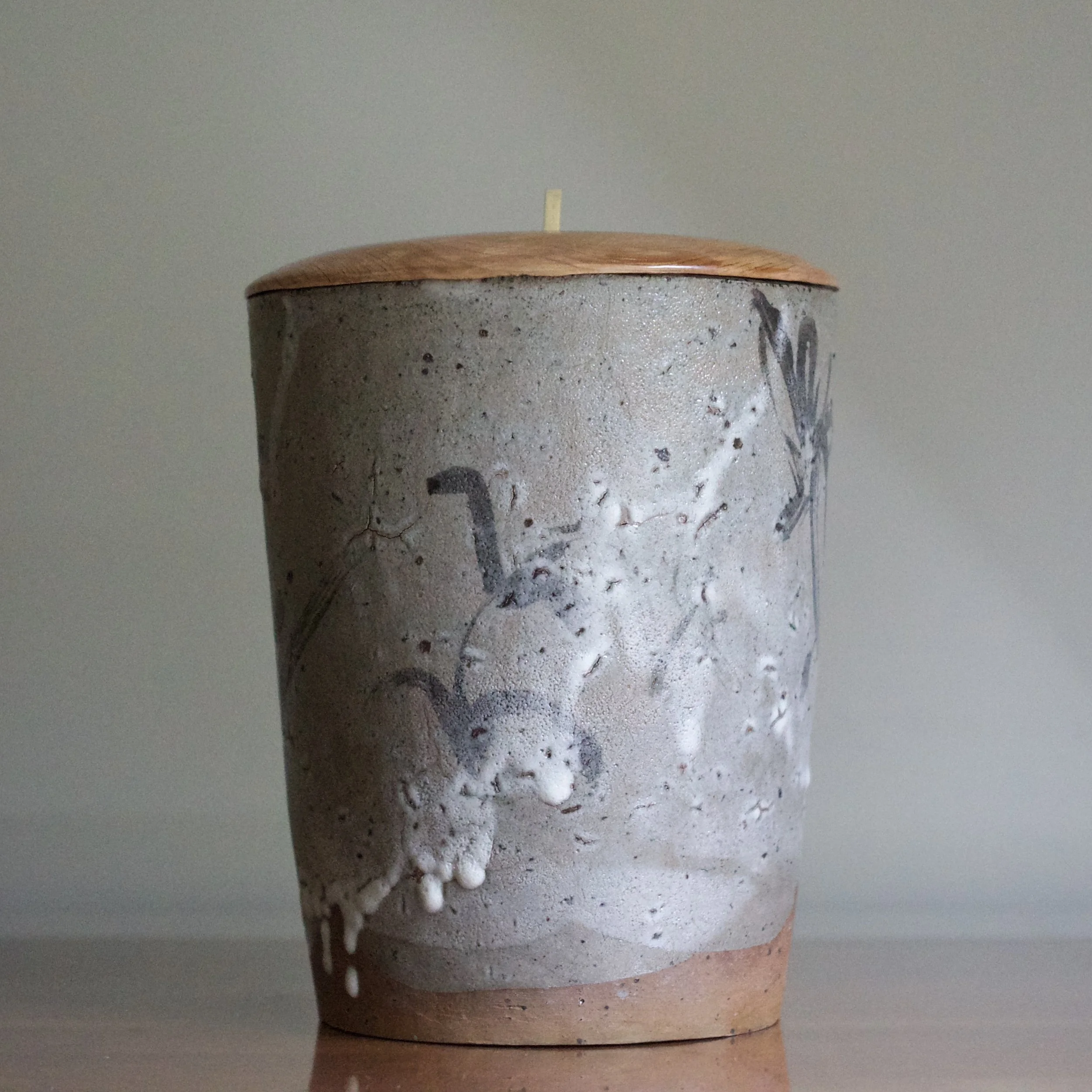
“絵唐津水指” e-karatsu mizusashi
Uchida Saraya-gama, Takeo, Saga Prefecture; c. 2010’s; 8 3/4” to top of rim, 10 1/8” to top of lid’s handle, 7 1/8” wide by 6 5/8” deep.
$985 (CAD)
One of the most prominent artists potting in the karatsu tradition, Munehiko Maruta lives and works in the area of Kyushu where Korean style ceramics are common. Korean potters were forcibly settled there in the late 16th century, bringing with them the techniques and “rustic” aesthetics that continue to influence Japanese potting and tea wares.
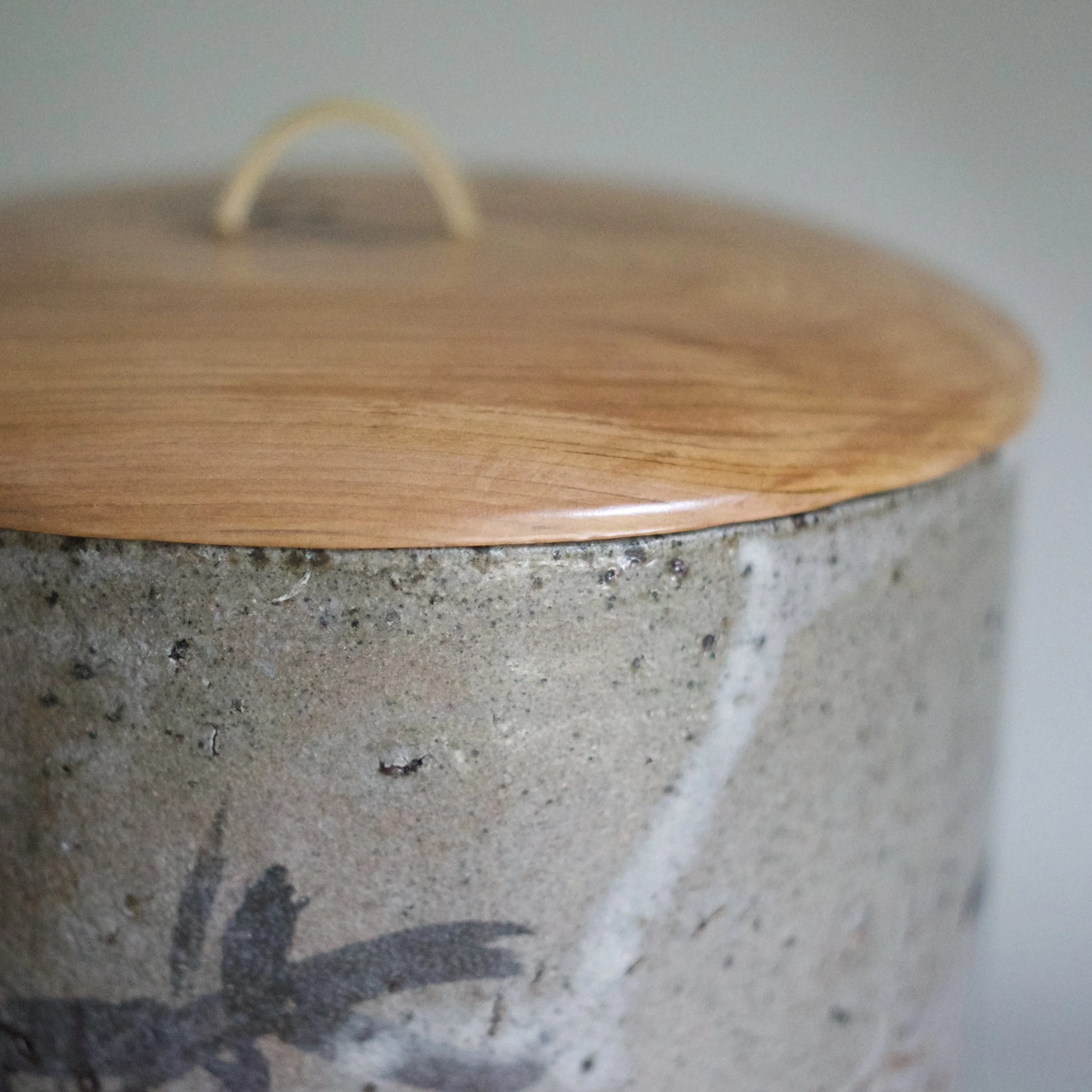
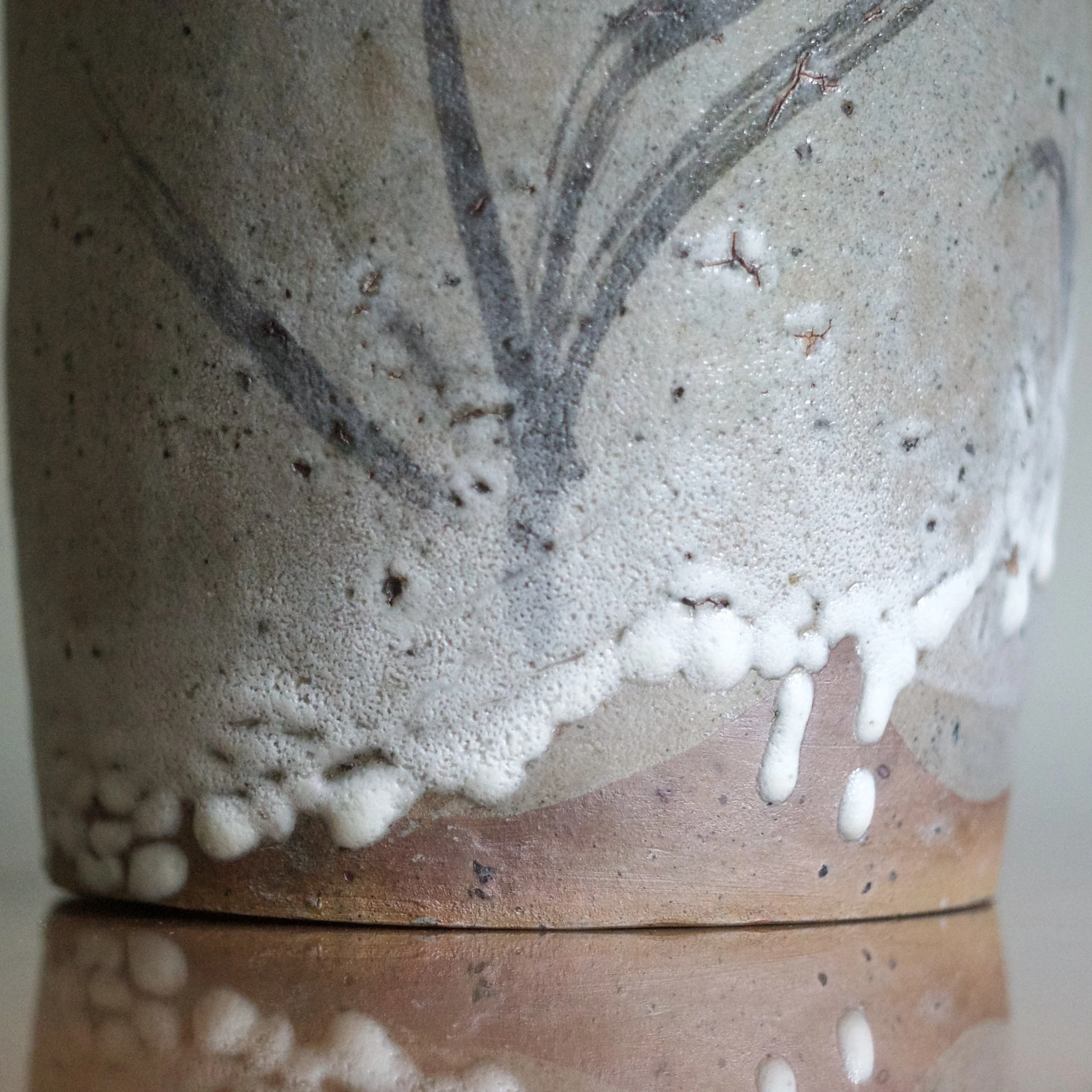
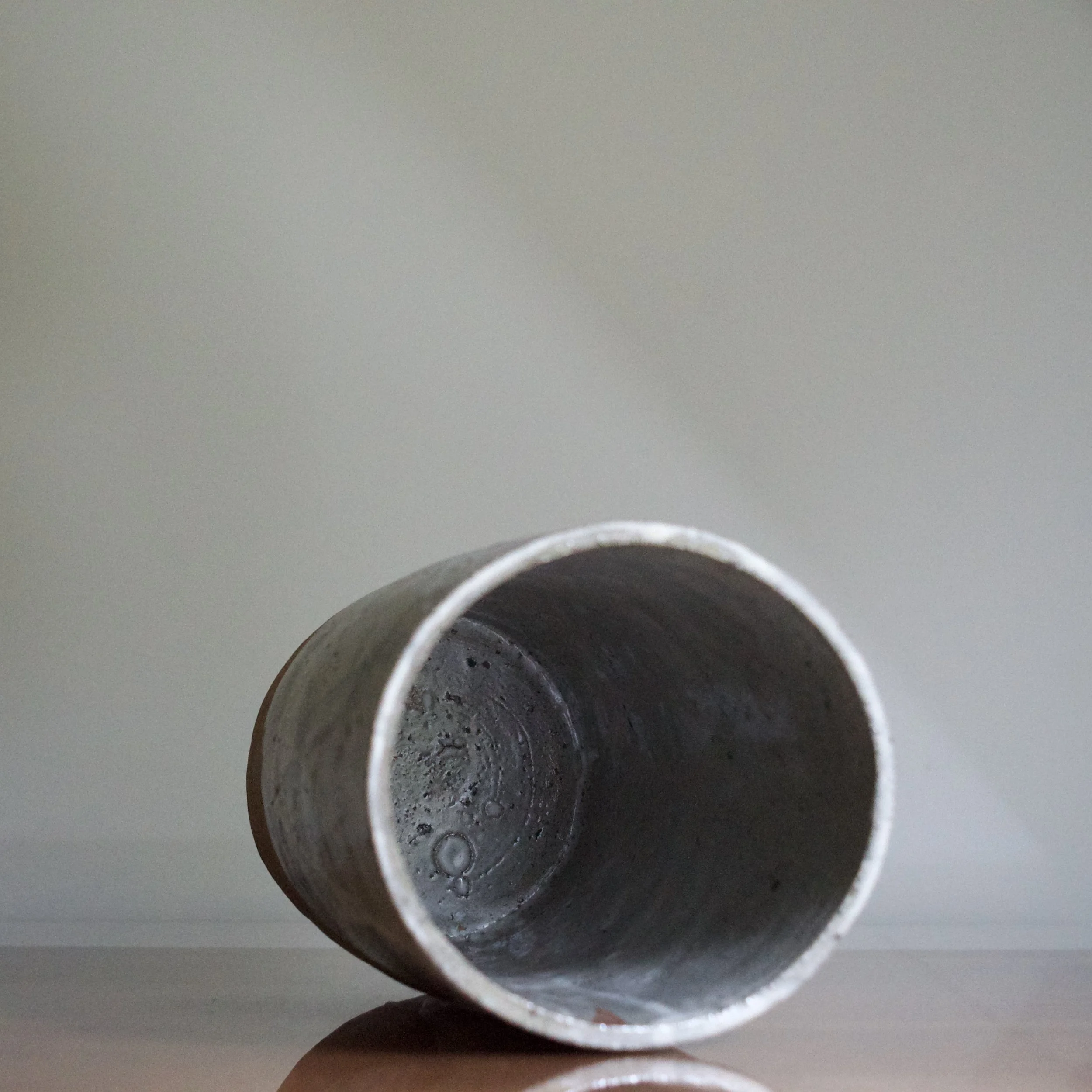
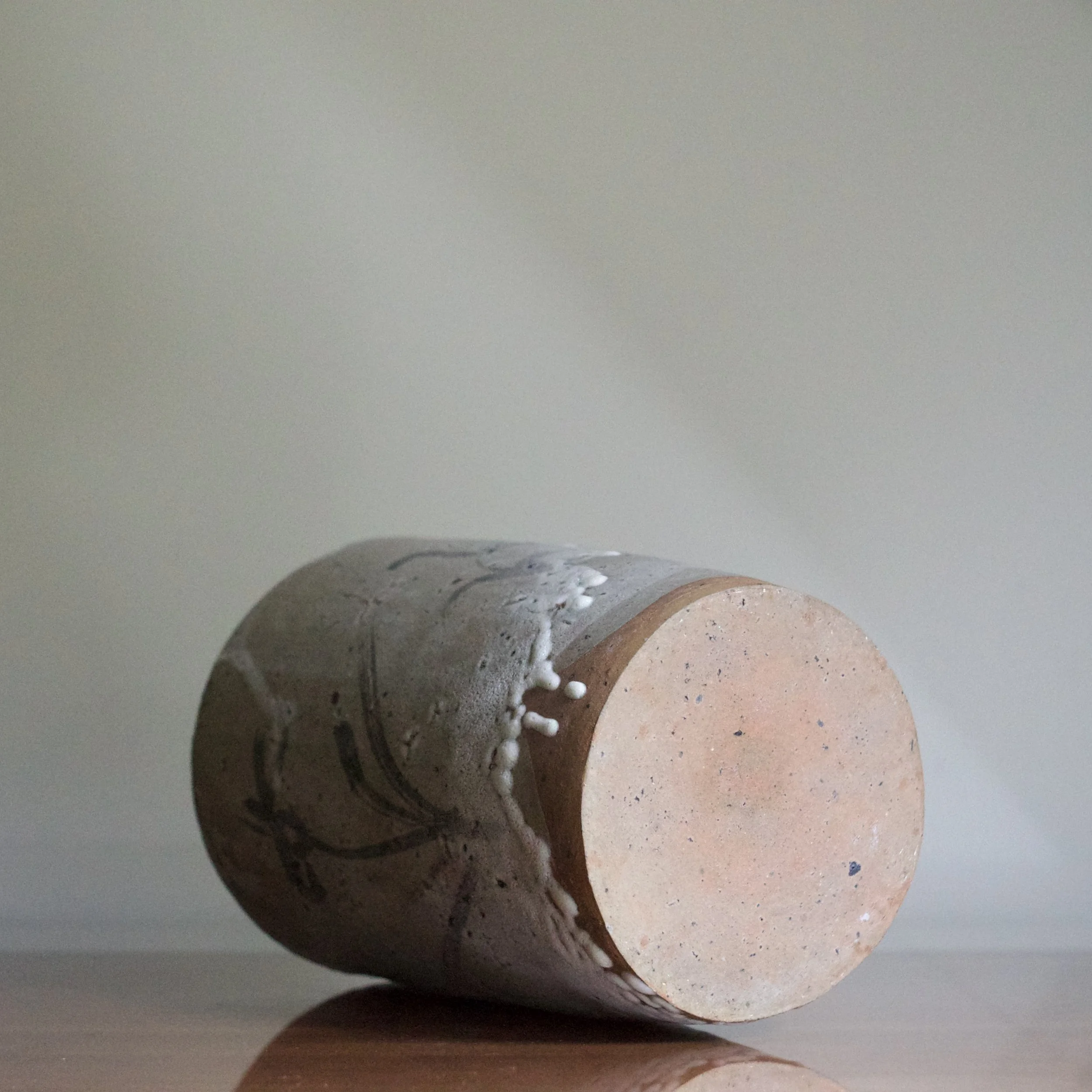
Maruta comes from a family of potters dedicated to the 20th century revival of Momoyama era karatsu wares. This mizusashi was formed from local clay - groggy and iron-rich - and then brushed with quick strokes of iron-oxide stain that depict local plant-life. Then covered with a glaze that is clear where thin and milky where thick, the jar beautifully captures the spirit of old karatsu.
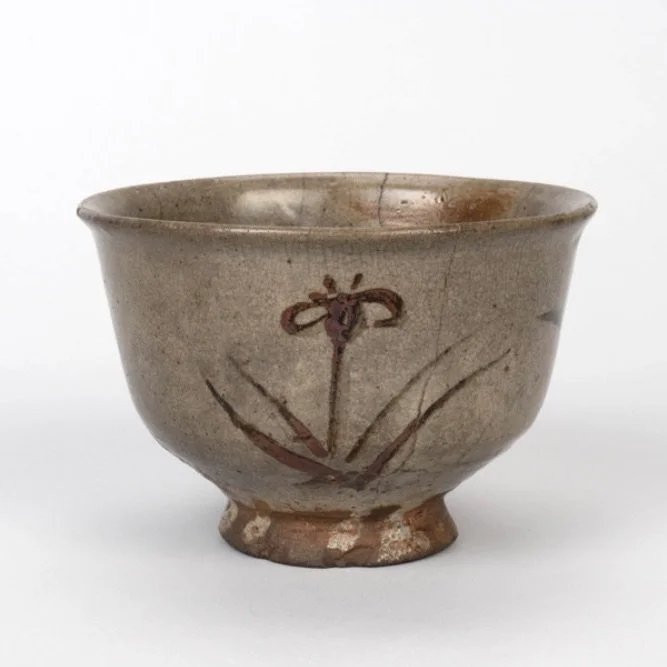
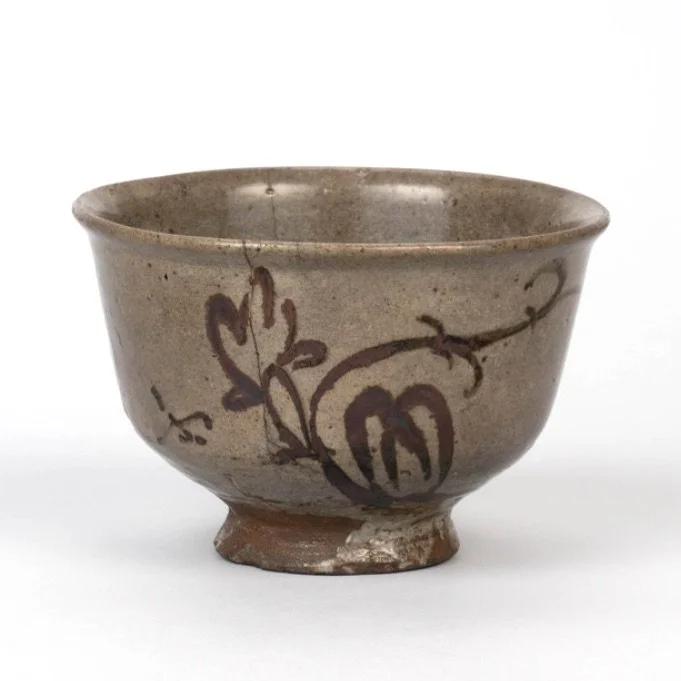
Thanks to some guidance from the ever-helpful dealer Kurimoto Hiroshi, it’s clear that the inspiration for this jar’s decoration comes from a piece in the Suntory Museum of Art in Tokyo. Thought to have been made in the late 16th century - at a kiln only 20 km from Maruta’s own - this bowl “with iris design in underglaze iron oxide” carries very similar motifs as his mizusashi.
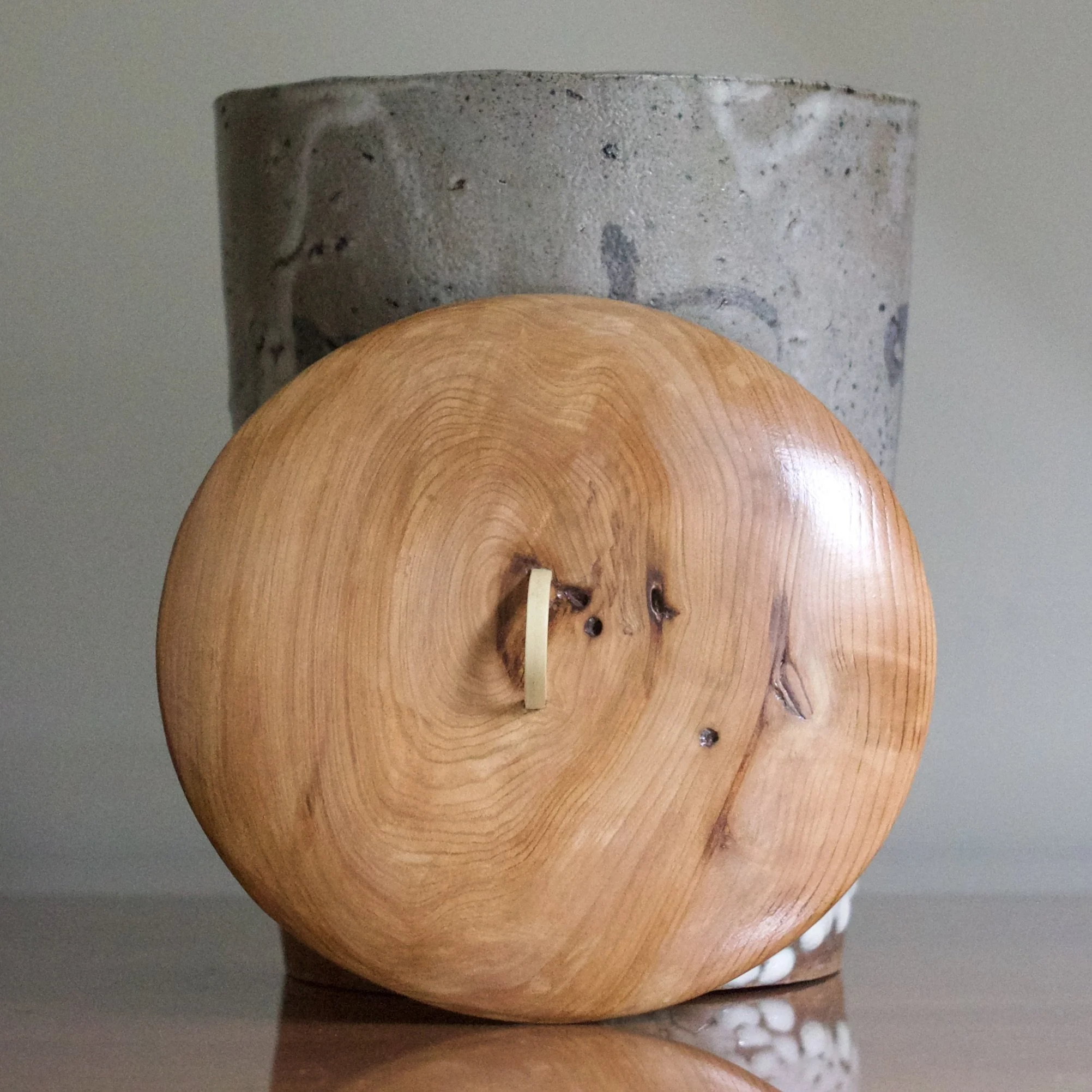
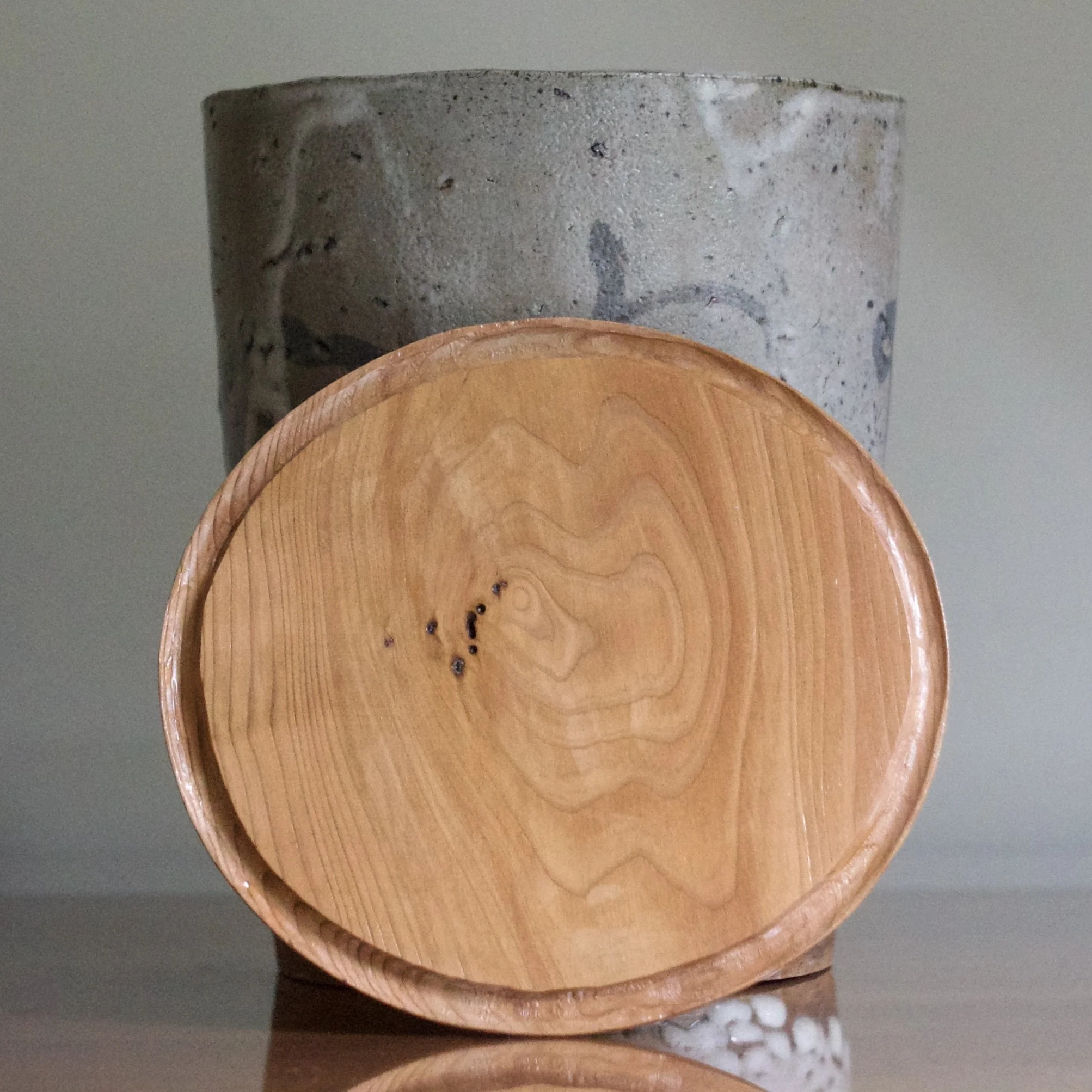
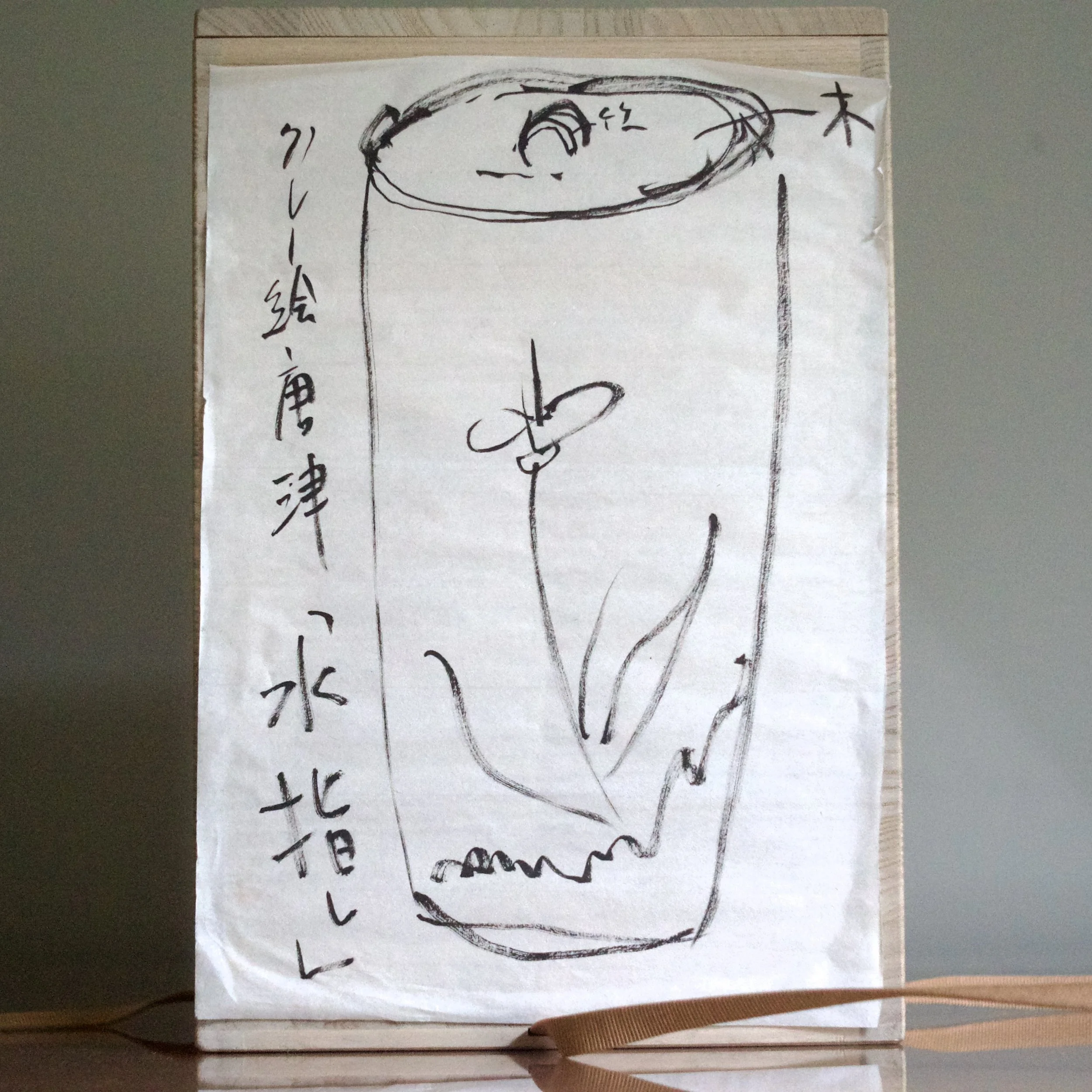
Another interesting detail is the paper illustration pasted to the back of the wood box. This is probably Maruta’s preparatory sketch for this work, along with a note regarding the lid. With its prominent, whorling grain, the custom wooden lid is likely made from zelkova. I’ve seen other mizusashi by Maruta with wood lids. There is something very satisfying about the pairing of karatsu’s organic clay and motifs with the rich warmth of polished wood.
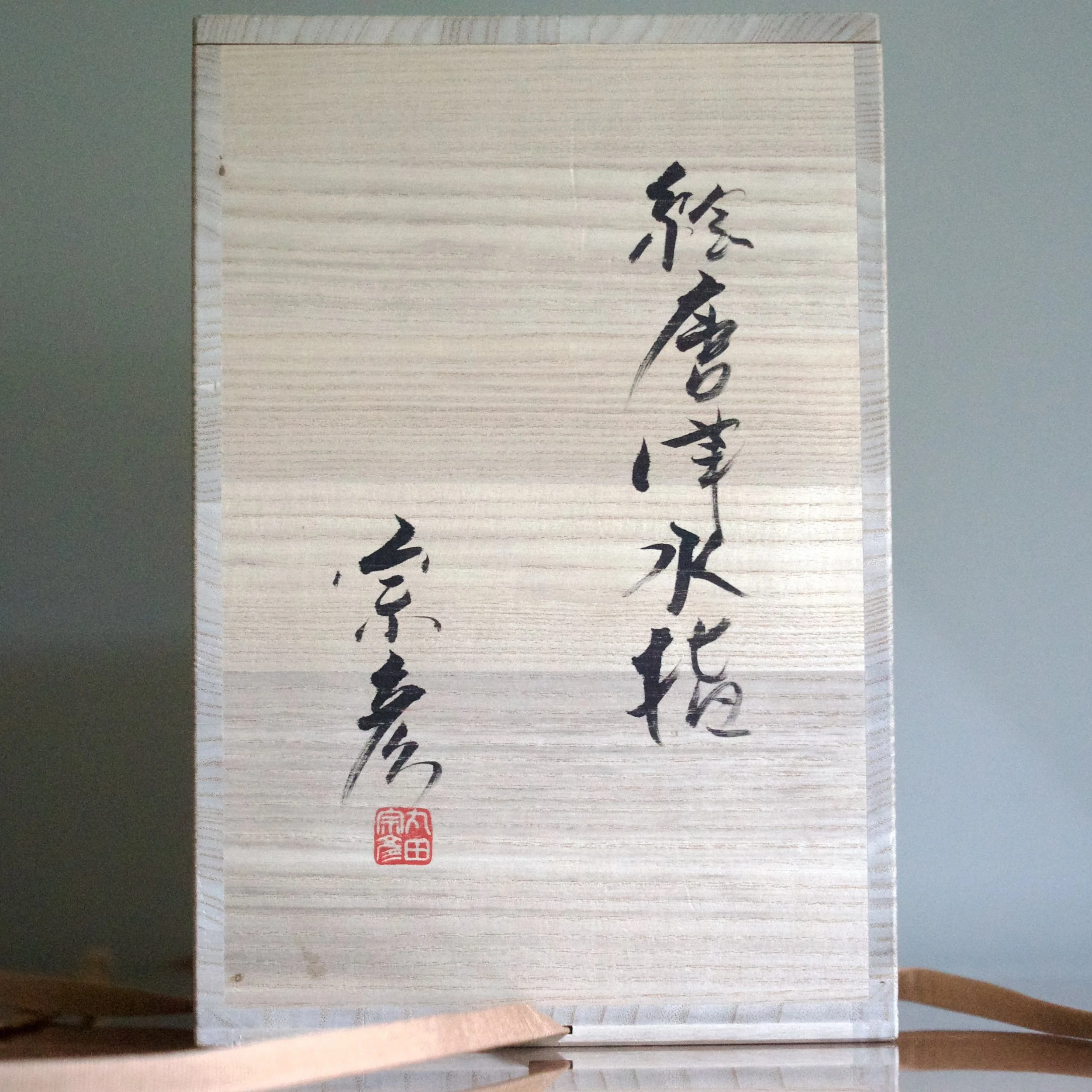
Comes with the signed, stamped, and titled wood box, stamped wrapping cloth, and CV.