Akihiko WATANABE (1959 -)
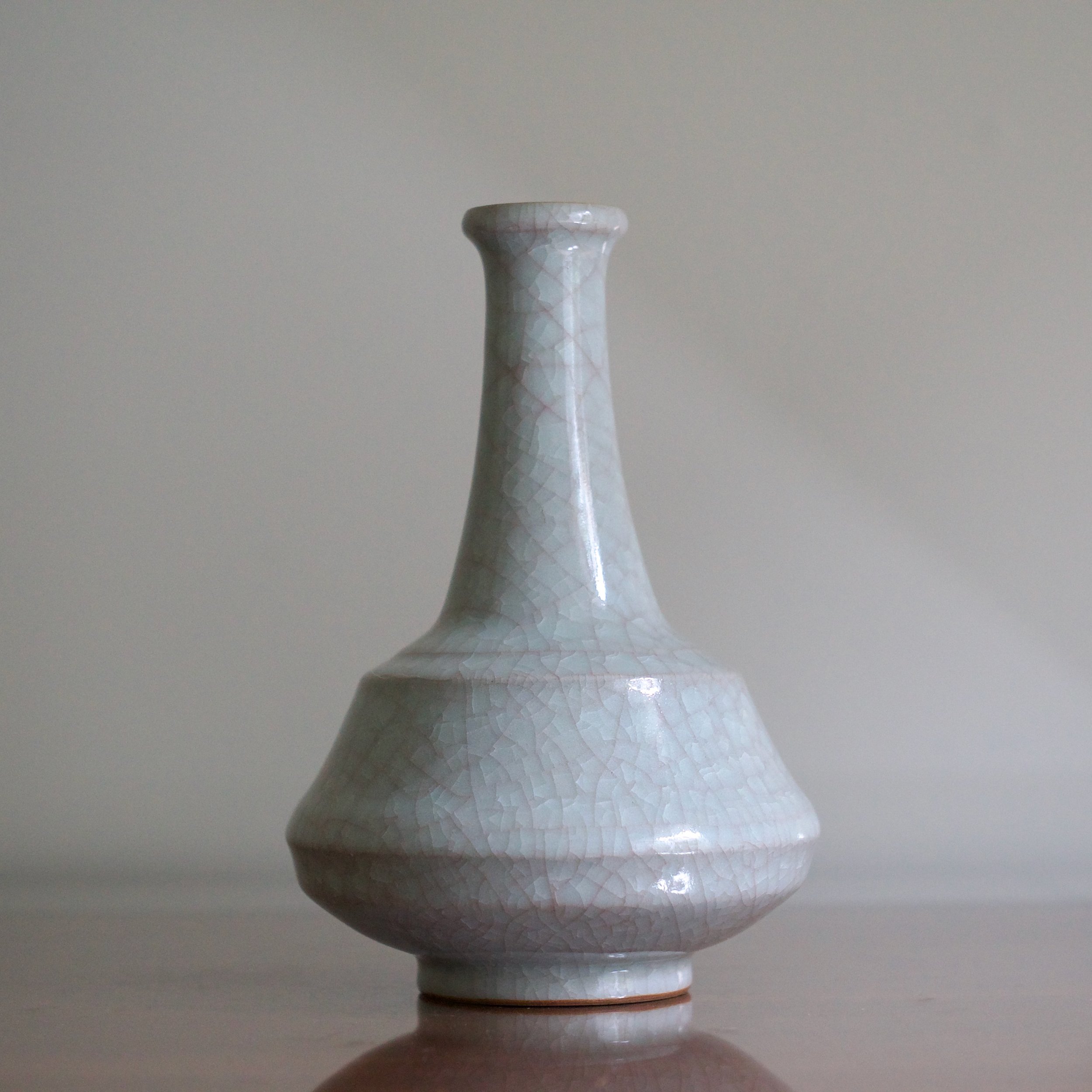
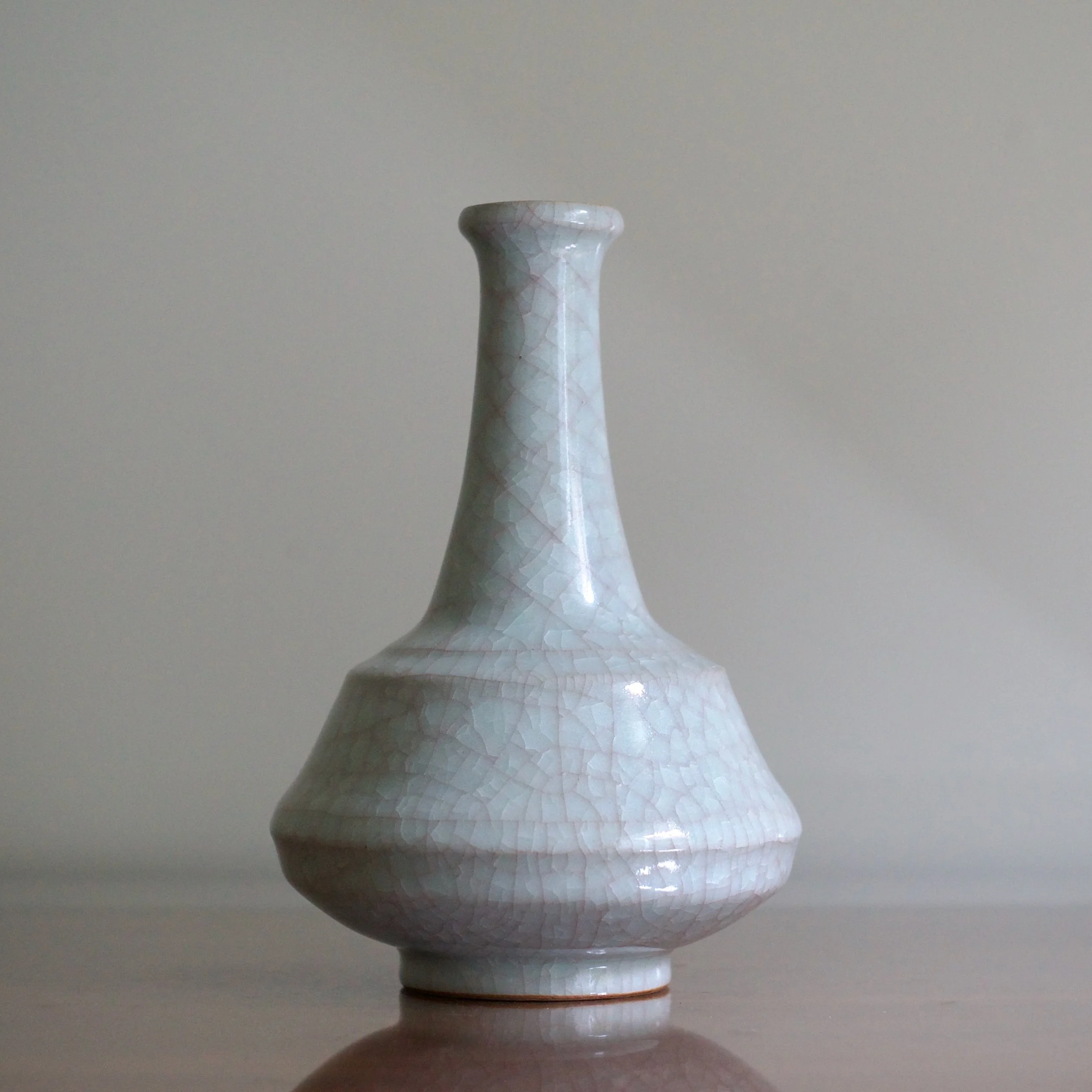
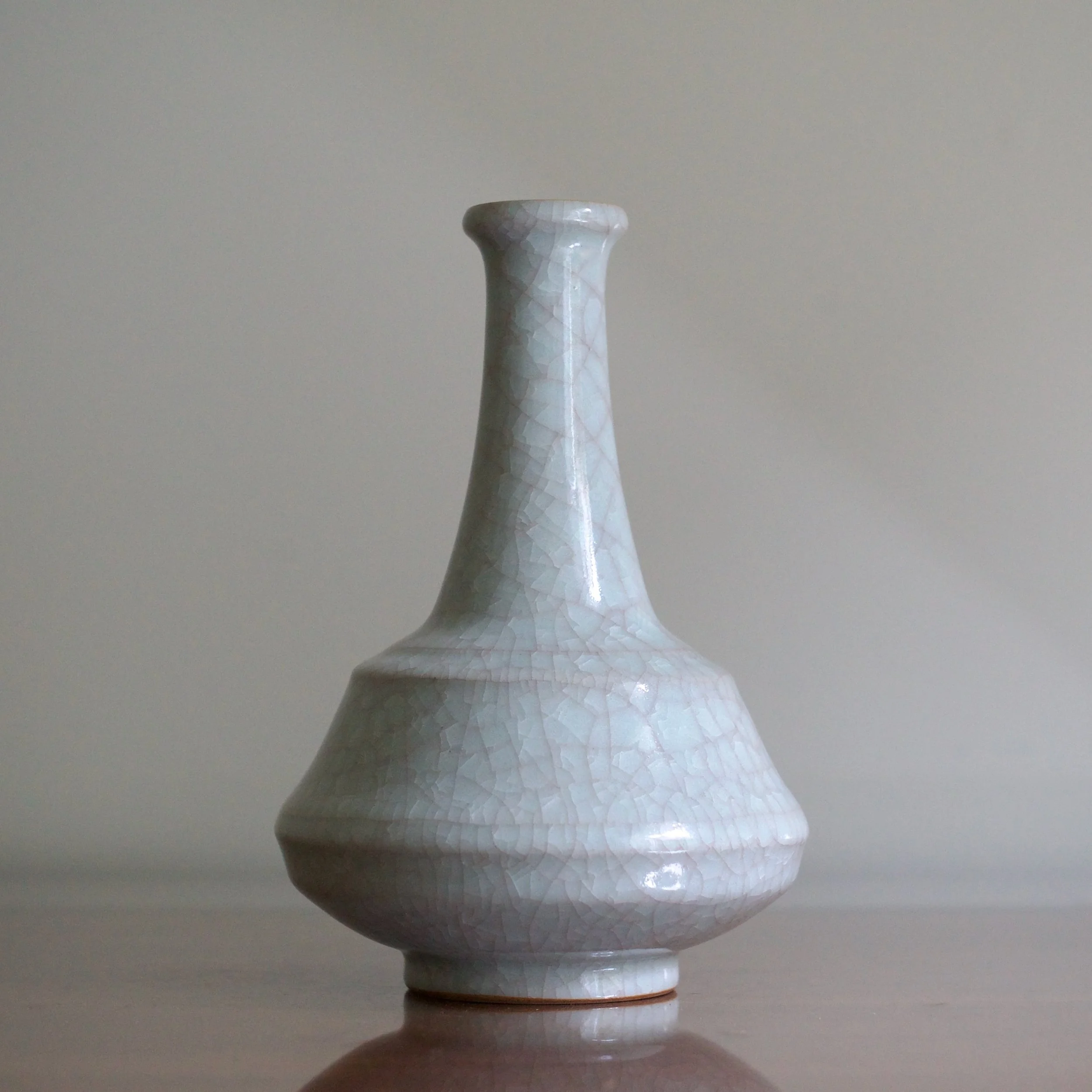
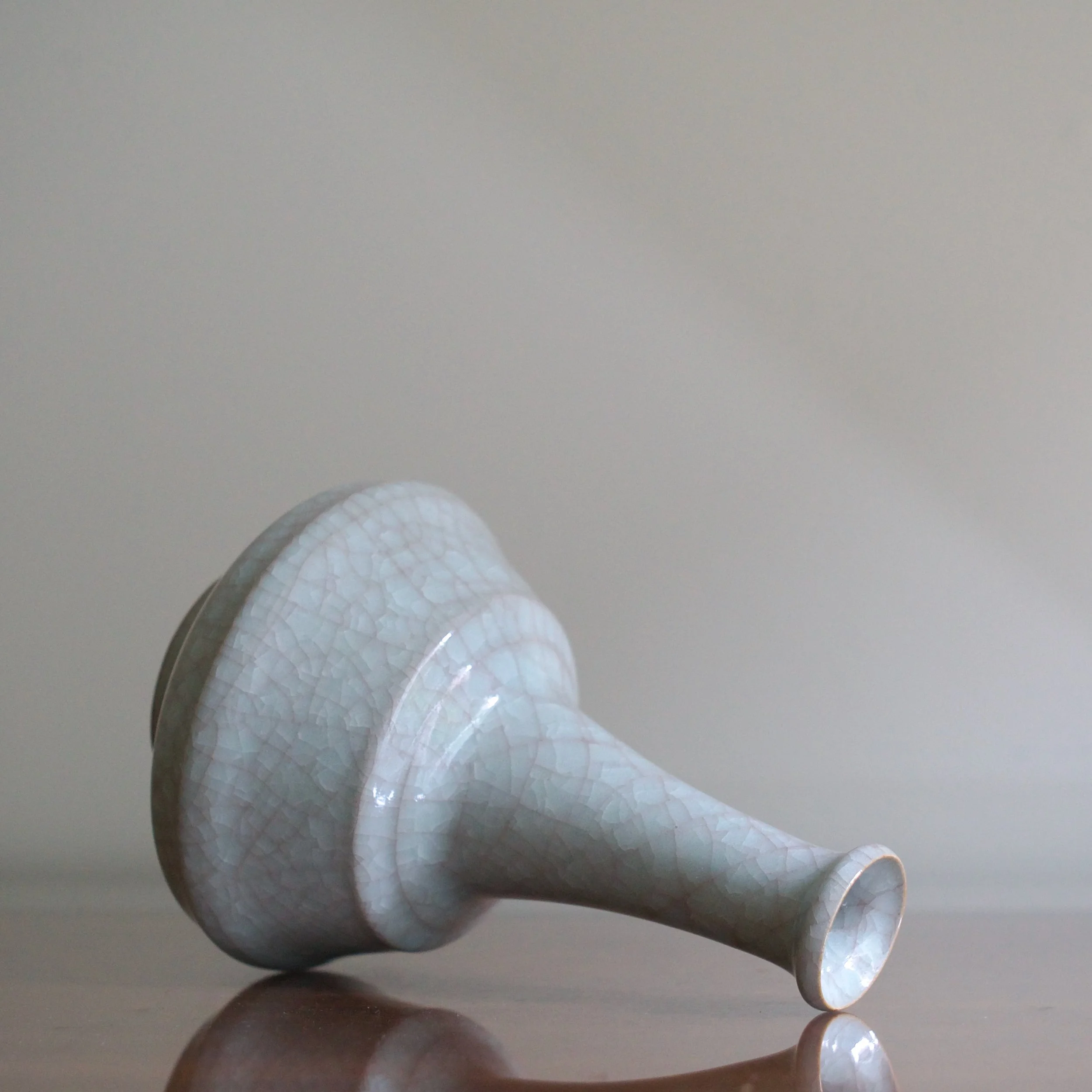
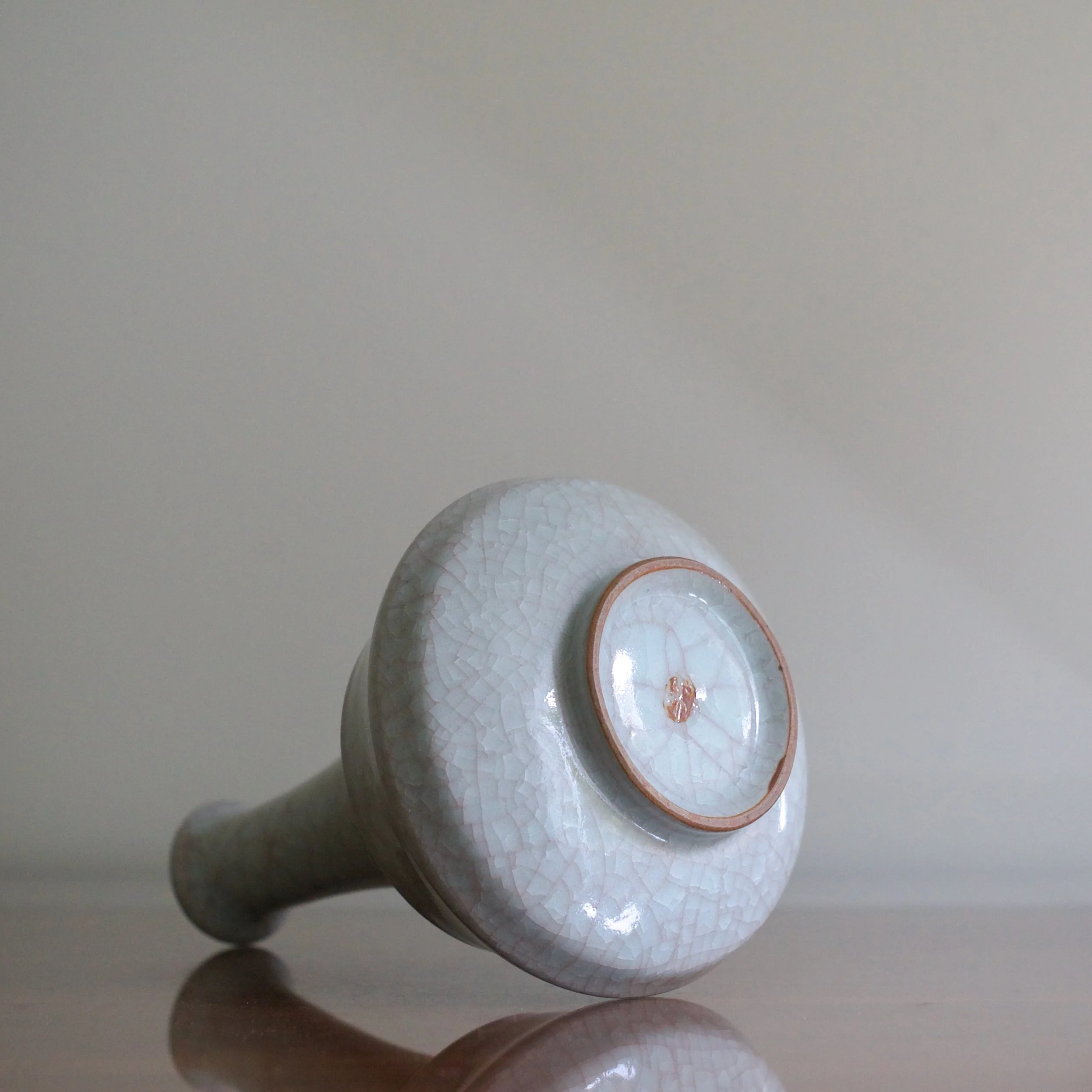
“青瓷砧” celadon kinuta vase
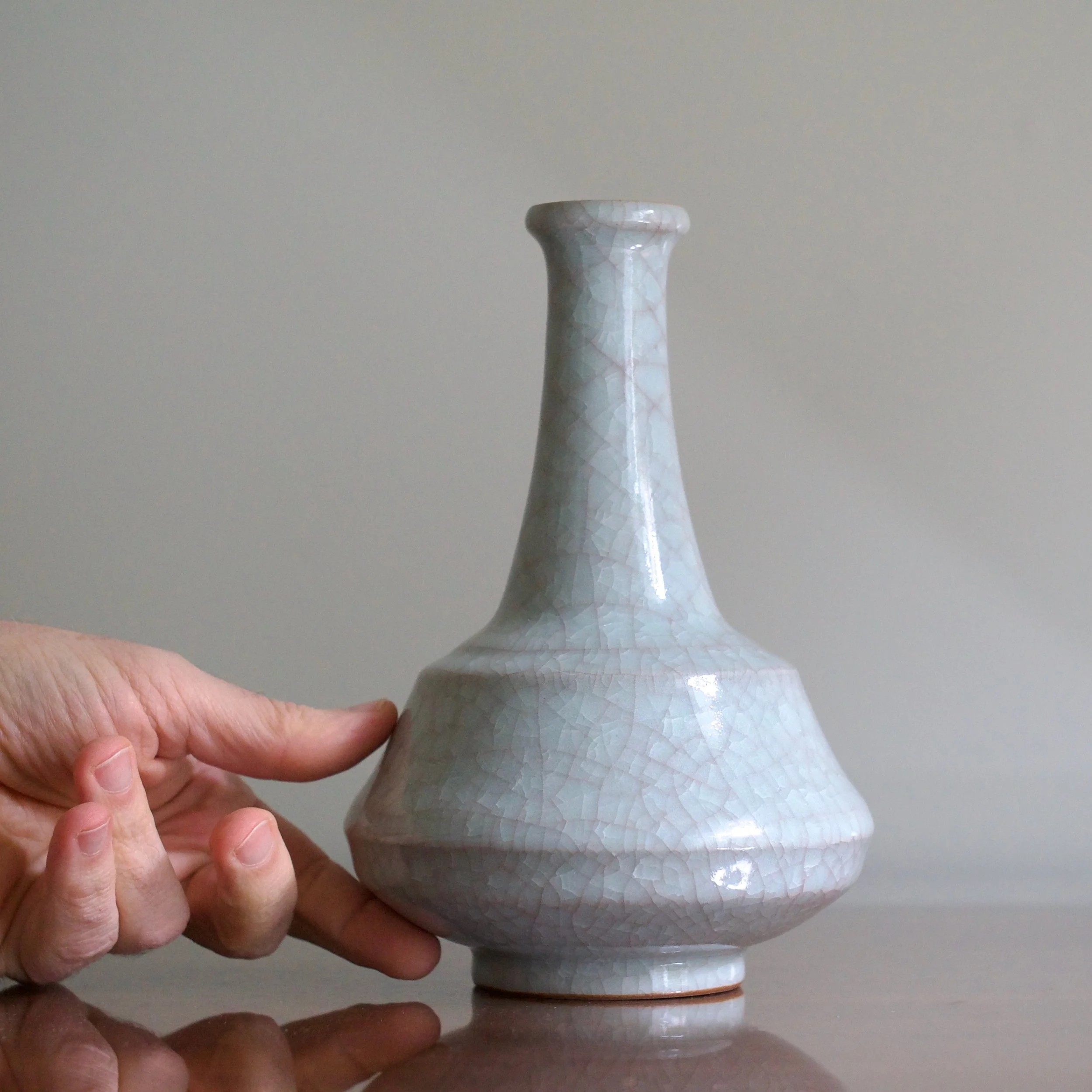
Raijin-gama, Hirashimizu, Yamagata; c. late 1990’s; 8” tall by 5 3/8” wide.
$775 (CAD)
Currently based in Shizuoka, Akihiko Watanabe made this earlier piece in the late 1990’s, firing it in his first wood-fuelled kiln - his Raijin or Thunder God kiln. Watanabe’s celadons have gained considerable attention as he is one of the few Japanese potters wood-firing celadon today. A notoriously difficult ware to master, it is made all the more challenging when the vagaries of wood fuel are added to the mix.
Watanabe uses the term “kinuta” to describe this vase, and while the kinuta form is often seen in more rugged Mino wares, it has other specific associations with celadon. A traditional wooden laundry tool, kinuta commonly refers to this kind of vase's mallet-like shape. Watanabe’s vase is especially angular, likely referencing archetypal kinuta Longquan celadons from the Northern Song dynasty.
The distinct shape of Longquan kinuta vases might even be the origin for this form in Japanese pottery. But in the world of celadon, kinuta also came to be associated with the distinct colour of Longquan celadons. So Watanabe’s “kinuta” is effectively a double nod: not just to its mallet form but also its soft “heavenly” blue colour.
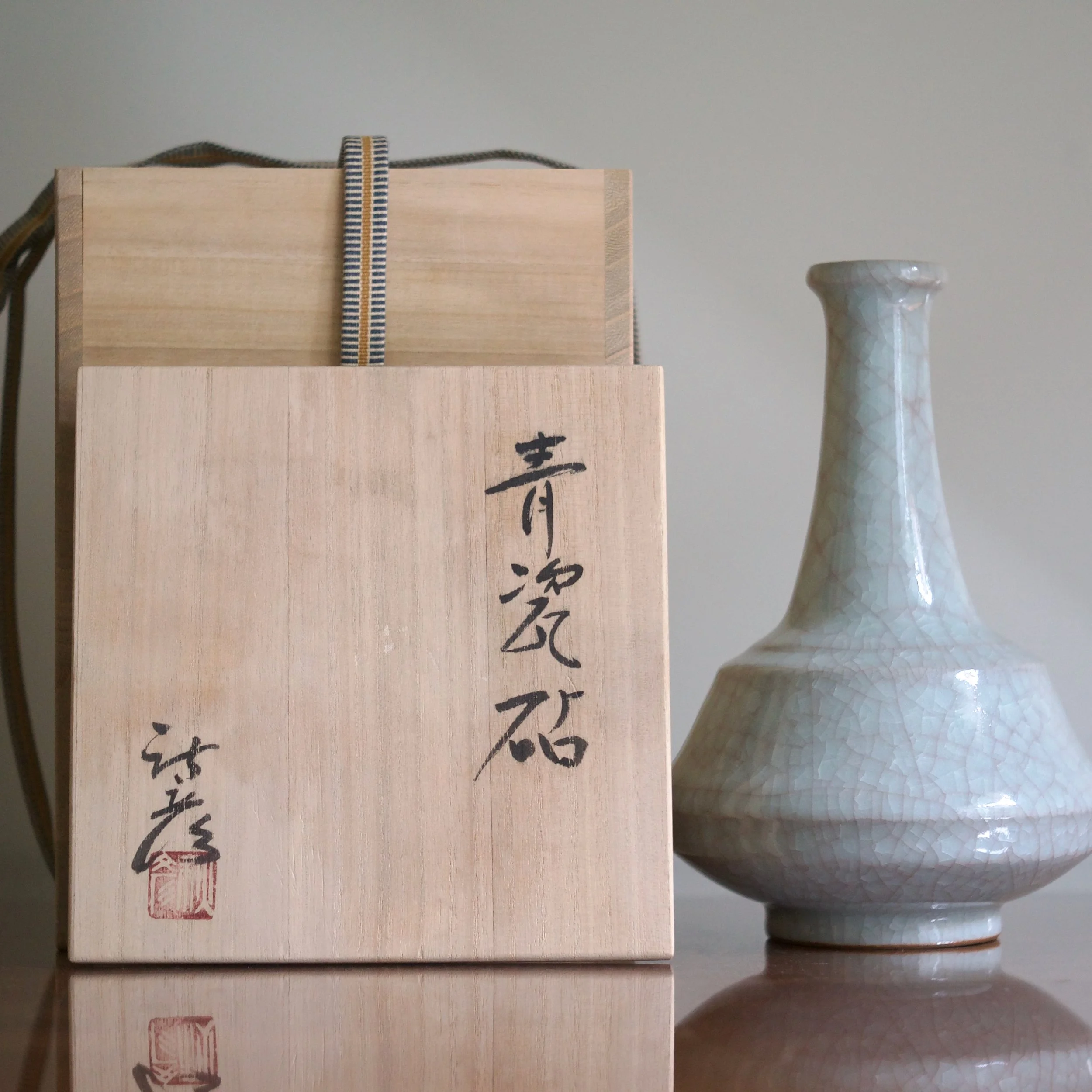
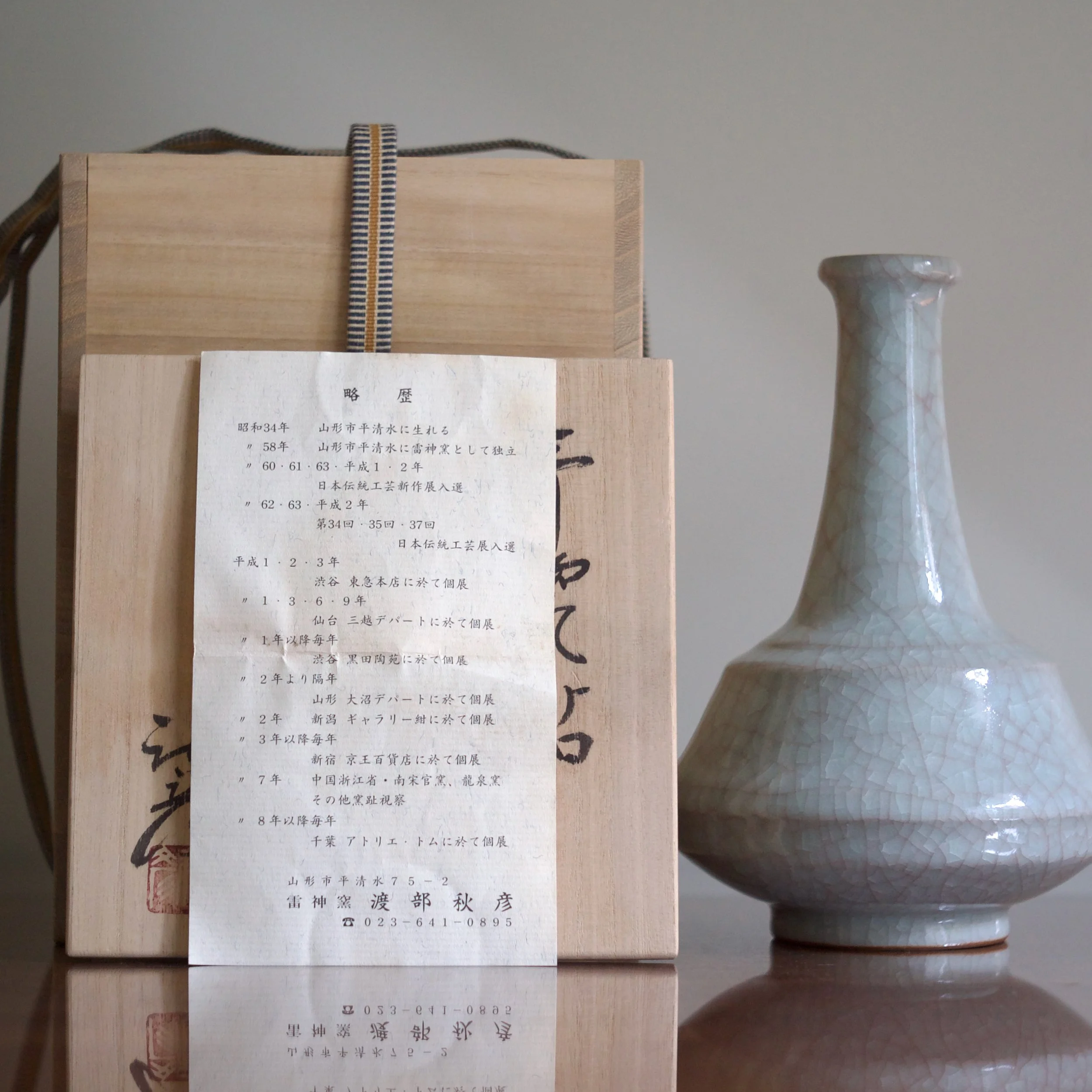
Comes with the signed, stamped, and titled wood box, and CV.